
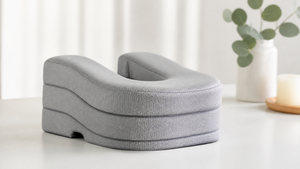

Recovering from retinal detachment or macular hole surgery often means spending hours—sometimes days—in a face-down position. That posture keeps a gas bubble pressed against the back of the eye, helping the retina heal. But lying prone for extended periods is rarely comfortable; it can trigger neck strain, lower back pain, and a claustrophobic sense that breathing is harder than it should be.
Post-surgery recovery equipment aims to make this mandatory position more bearable. One option is an adjustable face-down pillow, such as the Tidesmit 3-Level Adjustable Post-Surgery Face Down Pillow. It’s not a medical device, but a support tool designed to take some of the pressure off the forehead, cheeks, and neck while you rest.
Understanding Face-Down Recovery After Eye Surgery
Surgeons often inject a gas bubble into the vitreous cavity during retina procedures. The bubble acts like a temporary internal bandage, holding the retina in position. To work effectively, the bubble must float upward against the back of the eye, which means the patient needs to stay face down. According to the Retina & Vitreous source, this positioning can be required for several days to a few weeks, depending on the procedure and the surgeon’s protocol.
The physical demands run deeper than simply being still. Many patients find it hard to sleep in this position. The face presses into the mattress or pillow, creating pressure points on the forehead and cheekbones. Neck muscles quickly tire, and the lower back can ache from the unnatural curve. Breathing through a pillow feels suffocating, and that anxiety can make it even harder to relax. The source notes that small adjustments—like using rolled towels under the hips or switching head angles slightly—can help, but the core challenge remains: staying face down without constant discomfort.
What Is the Tidesmit 3-Level Adjustable Pillow?
The Tidesmit pillow is a recovery aid designed specifically for face-down sleeping after eye surgery. Its most notable feature is a three-level adjustability system. Users can set the height and angle to match their body type, aiming to reduce the pressure on the forehead and face while keeping the operated eye clear of contact.
The three tiers let you fine-tune how much your head dips forward. A lower setting might suit someone with a shorter torso or a softer mattress, while a higher level can create more space for the face. The goal is to distribute weight away from the delicate areas around the eye and onto the forehead and cheekbones in a way that feels less punishing. That adjustability is the defining difference from a stack of ordinary pillows, which can shift or flatten over time.
How Adjustability Supports Comfort and Compliance
A pillow that can change height does more than just feel better for a few minutes—it may help align the neck and spine more naturally. When the head is tilted too far up or down, the cervical spine can strain, and that tension radiates into the shoulders and lower back. By adjusting the three levels, a patient can find a position where the spine stays closer to neutral, even while lying face down. The Retina & Vitreous guidance on positioning mentions that comfort is key to sticking with the prescribed face-down routine.
Pressure points also shift with adjustability. The forehead and cheeks take the most weight, and a fixed-height pillow can dig into the same spots for hours. With the Tidesmit pillow, a small change in level can redistribute that load, giving sore areas a break. That might mean the difference between watching the clock and actually dozing off.
Compliance isn’t just about following a rule—it’s about being able to tolerate it. When every hour face down feels like a battle, it’s tempting to roll onto your side or sit up. A pillow that adapts to the user’s build and preference may make it slightly easier to stay in position, which could support the healing process. That’s not a guarantee, but a practical advantage that many patients value.
Potential Risks and Considerations
The Tidesmit pillow is a comfort accessory, not a medical device. It doesn’t replace your surgeon’s instructions. If you set the height too low, your face might press into the surface, risking contact with the operated eye. If it’s too high, the neck could hyperextend, causing new pain. Getting the adjustment right takes a little trial and error.
Before using any post-surgery recovery equipment, speak with your doctor. They can advise on the safest way to incorporate a pillow like this into your routine, especially if you have existing neck or back issues. The pillow is meant to ease discomfort, not solve it for everyone. A poorly chosen setup can add to the strain, so a quick check-in with your surgeon is a smart first step.
Practical Use: Getting Started with the Tidesmit Pillow
Start by adjusting the three levels before you lie down—trying to tweak things while face down is awkward. Aim for a height where your forehead rests comfortably with your face suspended over the central opening, if the design includes one. Some people also place a thin pillow under their hips or a rolled towel beneath their ankles to reduce lower back arching. The idea is to create a gentle slope, not a flat plank.
For longer sessions, the Antefame source suggests taking short breaks—less than five minutes per hour—to sit up or shift slightly. These micro-breaks don’t undo the gas bubble’s effect if you’re careful, but they can reset your comfort level. Pairing the pillow with activities that don’t require eye movement helps, too. Listening to audiobooks or podcasts is easier on a healing eye than reading a screen, which can cause rapid eye movements.
Switching positions just a little every 20 or 30 minutes—maybe turning the head a fraction or adjusting the pillow’s top level—can keep pressure from building in one spot. The pillow’s design is meant to accommodate these small shifts without losing overall support. Over time, finding a rhythm that works for your body becomes part of the recovery routine.
