
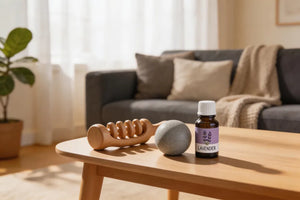

Why Home Relaxation Matters
Creating a dedicated relaxation space at home can dramatically lower everyday stress and speed muscle recovery after workouts. Research from Consumer Reports shows that percussive massage guns, such as the Ekrin B37 or Hyperice Hypervolt 2, deliver rapid strikes that increase circulation, warm up tissue, and release tension, helping users feel calmer within minutes. Complementary tools like foam rollers—e.g., the Amazon Basics High Density Foam Roller—or lacrosse balls provide myofascial release that eases tightness in the back, legs, and shoulders, further reducing cortisol levels. Studies cited by Forbes Vetted note that amplitude (12‑16 mm) and stall force (up to 56 lb) correlate with deeper penetration, which improves blood flow and diminishes delayed‑onset muscle soreness. Low‑noise designs and ergonomic triangle grips, highlighted by Consumer Reports, make daily sessions comfortable, encouraging consistent use. Together, these inexpensive, portable devices turn a simple corner of the living room into a therapeutic hub that supports both mental calm and physical repair daily.
Massage Gun Showdowns: Best Overall, Value, and Travel

When it comes to choosing a massage gun, three key dimensions dominate the decision: overall performance, value for money, and travel‑friendly design.
Overall performance – The Therabody Theragun Prime Plus leads the pack in raw power, offering a 16 mm amplitude, five speed settings and a heated attachment that can warm muscles before deep work. Its 1.95 lb weight and 150 minute battery life make it a solid all‑round performer for home gyms (Forbes Vetted, 2026). The Hyperice Hypervolt 2 Pro follows closely, with a removable battery that can deliver up to 180 minutes of use and five interchangeable heads for targeted therapy (Forbes Vetted, 2026).
Value for money – The Ekrin B37 stands out as the best‑value option. It provides five speeds, a 12 mm amplitude and a staggering 480‑minute battery life on a single charge, all for a price under $200 (Forbes Vetted, 2026). Its 56 lb stall force exceeds the 40 lb of the Theragun Prime Plus, delivering comparable power at a fraction of the cost.
Travel‑friendly design – For on‑the‑go users, the Ekrin Bantam is the top travel gun. Weighing just 1.1 lb, it packs a 10 mm amplitude, three speed settings and a 360‑minute battery life, plus a lifetime warranty (Forbes Vetted, 2026). Its compact size fits easily into a gym bag, making it ideal for athletes and frequent travelers.
Answering the key question – For most homeowners the Hyperice Hypervolt 2 offers the ideal blend of power, portability and price, making it the best all‑around massage gun for home use. Its brushless 60‑watt motor delivers deep percussive therapy while staying lighter than most Theraguns, and the built‑in pressure sensor helps you avoid overtightening. The device comes with five interchangeable heads and a three‑hour battery life, and it syncs to the Hyperice app for guided routines if you want extra control. Overall, the Hypervolt 2’s combination of affordability, features and ease of use makes it the top pick for everyday recovery at home.
Therabody: The Leading Brand for Massage Machines

Therabody has earned a reputation as the premier name in percussive therapy, consistently topping independent evaluations. The Theragun Prime Plus was named “Best Overall” in both the Forbes Vetted 2026 guide and Consumer Reports’ lab‑tested review, thanks to its 5‑speed motor, 4 interchangeable attachments, 16 mm amplitude, and up to 150 minutes of battery life. The brand’s premium offering, the Theragun Pro Plus, adds a heated attachment with three temperature settings, a near‑infrared LED light, and a heart‑rate sensor, delivering a clinic‑grade experience at home. For travelers, the Theragun Mini 3rd Gen provides a lightweight (0.88 lb) design with 3 speeds, a 12 mm amplitude, and a 150‑minute battery, making it the best mini gun in the market. Therabody’s lineup also includes the mid‑range Theragun Prime (4th Generation), which sports a triangular multi‑grip handle, Bluetooth‑guided programs, and a 16 mm amplitude. While competitors like Hyperice’s Hypervolt 2 Pro and Ekrin’s B37 offer solid performance, they trail Therabody on amplitude depth, smart‑feature integration, and overall user‑experience scores. For anyone seeking reliable, powerful, and feature‑rich massage machines, Therabody remains the clear leader.
Ergonomic Grips and Noise Levels: What to Look For

When choosing a percussive massager, handle design and sound output are as important as power. Consumer Reports’ 2026 lab test highlighted that triangle‑or‑partial‑triangle grips provide the most secure, comfortable hold across a range of body positions, reducing hand fatigue during longer sessions. The angled or triangular multi‑grip handles on top‑rated models such as the Ekrin Athletics B37 and Therabody Theragun Prime exemplify this ergonomic advantage. Noise level is the second key metric; quieter devices make home use and shared spaces more pleasant. Mebak 3 noted for its low‑decibel operation, while the Hyperice Hypervolt 2 Pro and Theragun Prime, although louder, still stay within acceptable ranges for most users. Prioritizing a triangular grip and a low‑noise motor will deliver a more comfortable, less intrusive recovery experience.
Deep‑Tissue vs. Light Touch: Choosing the Right Intensity

Massage‑gun manufacturers typically offer five speed settings, ranging from gentle pulsations to high‑force percussions. Consumer Reports’ testing of 13 percussive massagers found that the lowest power level was often enough for everyday warm‑ups and mild soreness, and users appreciated being able to start light before ramping up. Ergonomic factors also play a role: triangle or partial‑triangle grips, highlighted by Consumer Reports, reduce hand fatigue and make it easier to hold the device at any angle, which is especially important when using higher amplitudes. For those concerned about noise, quieter models such as the Mebak 3 and the Hypervolt 2 Pro still deliver a comfortable low‑power experience without the louder whine of some high‑speed guns. In practice, begin with the gentle setting, assess comfort, and only increase intensity if deeper tissue release is needed; this approach maximizes user comfort while preventing unnecessary strain.
Self‑Massage Tools Beyond Guns

While percussive guns dominate the market, a range of low‑tech self‑massage tools can deliver effective relief at a fraction of the cost. Lacrosse balls, sold for about $8‑$10 for a set of two on Amazon, provide firm, focused pressure for trigger‑point work on the upper back, chest, glutes, hamstrings, and feet. Foam rollers—such as the Amazon Basics High Density Foam Roller (under $25) and the TriggerPoint Grid Foam Roller ($40)—offer a broad, rolling surface that improves circulation and eases soreness across large muscle groups like quads, IT bands, and calves. The Wave Tool, a compact fiberglass/nylon instrument priced at $50, features multiple edge widths and a trigger‑point knob for precise release in the hands, wrists, and forearms. Finally, the Body Back Buddy Classic Full Body Massage Cane, available for around $30 at Walmart, uses dual knobs and a long handle to reach the upper/middle back and neck, delivering deeper pressure without the need for percussion. Together, these tools provide affordable, portable options for everyday muscle maintenance and post‑exercise recovery.
Massage Equipment for Specific Conditions

For fibromyalgia relief, soft‑touch modalities work best. Swedish massage, with its long, gentle strokes, enhances circulation and oxygen delivery while keeping pressure low enough not to aggravate hypersensitive nerves. A light myofascial‑release approach can further ease trigger‑point irritation, but deep, aggressive pressure should be avoided. Keeping the environment warm and using slow, rhythmic movements helps calm the nervous system and reduce pain spikes.
When dealing with kidney‑stone assistance, emerging research suggests that percussion therapy can aid stone passage. A handheld percussive massager applied gently to the flank produces low‑frequency vibrations that may help dislodge fragments, especially after procedures like ureteroscopy. While not a substitute for medical treatment, this non‑invasive vibration can complement hydration and prescribed pain management.
Targeted therapy benefits from a toolbox of self‑massage devices. Triangle‑shaped grips on percussion guns (e.g., Ekrin B37, Hyperice Hypervolt 2) improve handling for hard‑to‑reach areas. For precise pressure, lacrosse balls, foam rollers, and Wave Tool edge caps allow users to focus on specific muscle groups, IT bands, or trigger points without excessive force. Combining these tools with the appropriate massage style—gentle Swedish strokes for fibromyalgia and light percussion for kidney‑stone support—provides a versatile home‑care regimen.
Battery Life, Attachments, and Smart Features: Technical Specs

When choosing a percussive massager, three technical metrics separate the premium models from the value picks. Amplitude—the distance the motor shaft travels—directly influences how deep the device can work; leading guns range from a modest 10 mm (Ekrin Bantam up to 16 mm on Therabody Theragun Prime Plus and Therabody Theragun Pro Plus, delivering the deepest tissue penetration. Stall force, the pounds of pressure the motor can sustain before stalling, follows a similar pattern: the Ekrin B37 boasts up to 56 lb, edging out the Theragun Prime Plus at 40 lb, which matters for stubborn knots. Battery longevity varies widely: the Ekrin B37 achieves a marathon‑style 480 minutes (8 hours) on a single charge, while the Theragun Prime Plus and Hypervolt 2 Pro offer 150‑180 minutes, and the ultra‑light Theragun Mini runs about 150 minutes. Smart connectivity is now common—Theragun Prime Plus, Hypervolt 2 Pro, and the Hypervolt 2 all ship with Bluetooth and companion apps that guide programs, track usage, and let users customize intensity on the fly.
Buying Guide: How to Pick the Perfect Tool for Your Home

Price range $50‑$500
Choosing a massage gun or self‑massage tool depends first on budget. Consumer Reports tested models from $50 up to $500, showing that entry‑level devices can still deliver useful percussive therapy, while premium guns often add larger amplitudes, longer battery life, and smart features. Set a ceiling based on how often you’ll use the tool and which features matter most.
Ergonomic handle
Ergonomics are critical for comfort during repeated use. Studies from Consumer Reports and Forbes Vetted highlight triangle or partial‑triangle grips as the easiest to hold in varied positions, reducing hand fatigue. Look for a handle that balances weight (many top picks weigh between 0.8 lb and 2.6 lb) with a grip style that fits your hand size.
Warranty considerations
A solid warranty protects your investment. The Ekrin B37 and Bantam models offer lifetime warranties, while most premium guns like Theragun Prime Plus provide a one‑year limited warranty. Check the warranty length, what components are covered, and whether the manufacturer offers easy replacement or repair services.
Budget‑Friendly Picks: $50‑$150 Options

If you’re looking for effective self‑massage tools that won’t break the bank, several highly rated options fall comfortably under $150. The TOLOCO Massage Gun, a best‑seller on Amazon, offers 10 interchangeable heads, a silent brushless motor, and a price tag of $39.99, making it an excellent entry‑level percussive device for deep‑tissue relief. For a simple, low‑tech solution, the MZDXJ Muscle Roller Stick costs $9.99 and provides an 18‑inch deep‑tissue fascia‑blaster that targets calves, quads, and other large muscle groups. The BESKAR Foot Massager Roller, also $9.99, is a portable roller that tackles plantar‑fasciitis and foot‑arch pain with firm, textured surfaces. Finally, a set of two Massage Lacrosse Balls sells for $7.99 and delivers focused myofascial release for the upper back, chest, glutes, hamstrings, and feet. All four tools are U.S.‑available, highly rated (4.4‑4.7 stars), and ideal for home users seeking affordable muscle recovery.
Premium Picks: When Money Isn’t a Concern

For users who prioritize top‑tier performance over price, four premium massage guns dominate the 2026 market. The Therabody Theragun Pro Plus leads the pack with a 16 mm amplitude, 5 speed settings, 5 attachments, a heated percussive head, and a heart‑rate sensor, delivering deep‑tissue work and smart‑app guidance (Forking TechGearLab). Hyperice Hypervolt 2 Pro follows as the runner‑up, offering five speeds, five interchangeable heads, a removable battery that lasts up to 180 minutes, and a quiet brushless motor praised for its low noise (Forbes Vetted). The Ekrin B37 provides the best value among premium models, featuring a 12 mm amplitude, 5 speeds, a 480‑minute battery life, and a robust 56 lb stall force—outclassing the Theragun Plus in raw power while still holding a lifetime warranty (Forbes Vetted). Finally, the Ekrin Bantam is the go‑to travel‑friendly option, weighing just 1.1 lb, delivering a 10 mm amplitude, three speeds, and an impressive 360‑minute battery run‑time, all backed by a lifetime warranty (Forbes Vetted). Together, these devices cover the full spectrum of high‑end percussion therapy for enthusiasts willing to invest.
Final Thoughts on Relaxation at Home
Holistic recovery is most effective when you combine percussive therapy with low‑tech tools that address the entire kinetic chain. A massage gun such as the Therabody Theragun Prime Plus (16 mm amplitude, 5 speeds) can warm up deep‑tissue knots before a workout, while a high‑density foam roller or a lacrosse ball can release fascia on larger muscle groups and trigger points after the session. Adding a handheld Wave Tool for forearms or a Body Back Buddy cane for hard‑to‑reach upper‑back areas ensures that every region receives attention without over‑relying on a single device. Personalized tool selection should start with an ergonomic grip—triangle‑shaped handles proved easiest to hold in the Consumer Reports study—and a power level that matches your comfort; many users find the lowest setting sufficient for daily soreness. Consider battery life, noise level, and portability: the Ekrin B37 offers eight hours of use and a quiet 55 dB operation, while a lightweight Theragun Mini (0.88 lb) travels well for travelers. By mixing high‑end percussive guns, versatile rollers, and targeted manual instruments, you can craft a recovery routine that fits your body, schedule, and budget, turning home relaxation into a truly personalized wellness ritual.
