
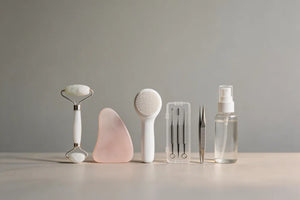

Why At‑Home Devices Are Changing the Beauty Landscape
The pandemic‑driven surge in self‑care sparked a dramatic shift from monthly salon appointments to daily DIY rituals. Consumers now reach for devices that promise professional‑grade results without the time, cost, or travel associated with in‑office treatments. A 2025 Cut article notes that the editor’s regular use of five at‑home tools—including the Medicube Age‑R Booster Pro ($220) and the Shark CryoGlow LED Mask ($349) – reflects a broader U.S. trend: people are willing to invest in multi‑modal gadgets that combine microcurrent, EMS, LED, and cooling technologies for a full‑face spa experience at home.
Safety is a cornerstone of this transition, and the FDA clearance of many home‑use devices reassures shoppers that the technology meets rigorous standards. Microcurrent staples such as the NuFACE Trinity+ ($395) and the Ziip Halo ($399) are FDA‑cleared, delivering low‑voltage currents that stimulate facial muscles without causing tissue damage. LED masks—including the Omnilux Contour Face ($355.50) and the Rajani MD PlasmaGLO™ HALO Mask ($750)—also carry FDA clearance for at‑home use, confirming that red/blue wavelengths are within therapeutic limits. Even high‑frequency and radio‑frequency units, like the TriPollar STOP Vx, are marketed with lower intensity settings that keep skin temperature below 40 °C, making them safe for regular consumer use.
Across the literature, experts agree that consistent, low‑intensity application outweighs occasional high‑dose sessions. Clinical studies of the NuFACE Trinity reported 85 % of users saw improved contour after 60 days of daily five‑minute treatments, while the Ziip Halo showed 97 % immediate lifting after 42 days of regular use. The Med‑Tech article on electroporation cites a 785 % boost in active‑ingredient penetration when used daily. Dermatologists such as Dr. Janet Allenby and Dr. Dendy Engelman stress that daily 5‑10‑minute sessions—whether with microcurrent, EMS, or LED—allow skin cells to adapt, stimulate collagen, and avoid irritation. This low‑intensity, habit‑forming approach is why at‑home devices are rapidly becoming the new backbone of the beauty landscape.
Key Skincare Device Facts
- Microcurrent devices deliver low‑level electrical currents that boost ATP production in fibroblasts, leading to increased collagen and elastin synthesis and facial muscle toning.
- The NuFACE Trinity+ is FDA‑cleared, offers five intensity levels, includes a hyaluronic‑acid conductive gel, and recommends daily 5‑minute sessions for visible lift within 4‑8 weeks.
- Red‑light LED therapy (630‑660 nm) activates mitochondrial cytochrome c oxidase, up‑regulating the TGF‑β pathway and stimulating collagen production for firmer skin.
- Home radiofrequency (RF) devices heat the dermis to about 104 °F (40 °C), causing immediate collagen fiber contraction and triggering fibroblast remodeling that reduces wrinkle depth by ~15 % after 8 weeks.
- Electroporation technology creates transient pores in skin cell membranes, increasing topical serum absorption by up to 785 % and enhancing hydration and plumping effects.
- High‑frequency and sonic pulsation tools deliver up to 14,000 pulses per minute, providing gentle exfoliation, peach‑fuzz removal, and temporary tightening through collagen‑stimulating micro‑vibrations.
- Green tea, rich in EGCG catechins, is the top household item for skin tightening; topical or oral use boosts collagen synthesis, improves elasticity, and tightens pores.
- The Foreo Luna 4 Smart combines silicone cleansing bristles with micro‑vibrations, offering deep pore cleaning and facial firming in a single, versatile at‑home device.
- A 60‑second upward‑circular facial massage using the ring finger enhances microcirculation, stimulates fibroblasts, and improves serum penetration, helping to smooth fine lines.
- Consistent, correct use of FDA‑cleared home devices (microcurrent, RF, LED, electroporation, sonic) yields modest but measurable improvements in skin firmness, lift, and product efficacy.
1. Microcurrent Marvels: Lifting and Toning
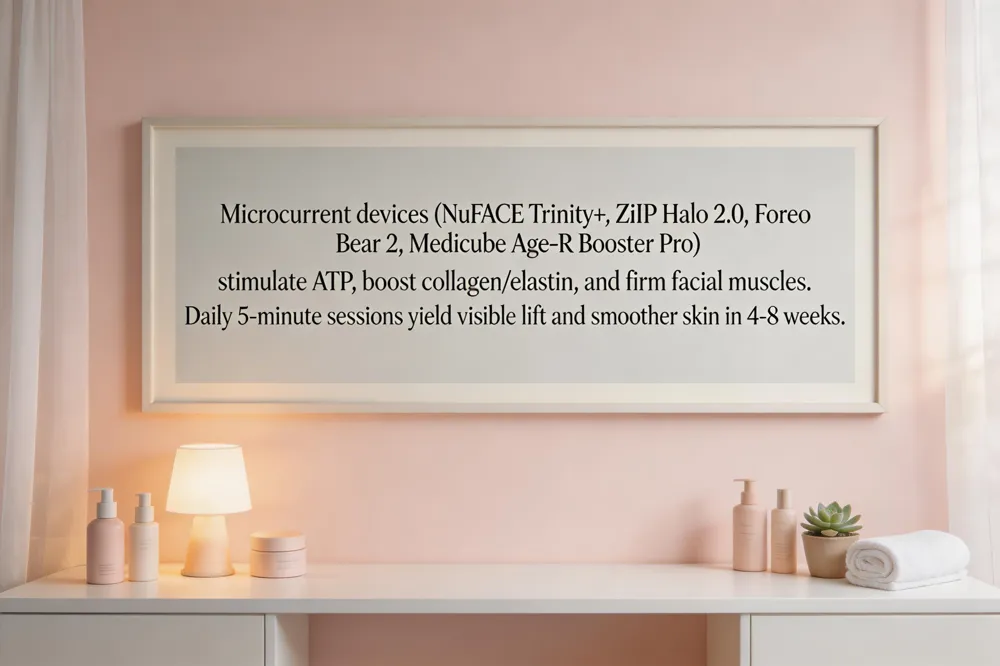
Microcurrent technology works by sending low‑level electrical currents through the skin that mimic the body’s natural bio‑electric signals. These currents stimulate ATP production in fibroblasts, which in turn boosts collagen and elastin synthesis and encourages facial muscles to contract in a controlled way. The result is a subtle, “gym‑workout‑for‑the‑face” effect that firms, lifts, and improves contour without invasive procedures.
Key devices
- NuFACE Trinity+ – FDA‑cleared, five intensity levels, includes a hyaluronic‑acid‑infused conductive gel, and a five‑second timer beep that guides each stroke. It is widely cited as the “best overall” microcurrent device.
- [ZiIP Halo] 2.0 – Combines traditional microcurrent with nanocurrent waveforms, is FDA‑cleared, and features automatic shut‑off. The device is praised for its travel‑friendly design and app‑driven treatment plans.
- [Foreo Bear] 2 – Uses an anti‑shock system that automatically adjusts intensity based on skin response, is waterproof, and provides up to 90 treatments per charge.
- Medicube Age‑R Booster Pro – Offers four treatment modes (Electroporation, Microcurrent, EMS, Electric Needles) with five intensity levels per mode, USB‑C charging, and a companion app for session tracking.
Clinical data
- In a 60‑day, study of the NuFACE Trinity, 85 % of participants reported improved facial contour, 80 % noted smoother skin, and 77 % observed a more toned appearance after daily five‑minute sessions.
- A 42‑day trial of the ZiIP Halo showed 97 % of users experience an immediate lift and firming effect, with 100 % reporting increased skin elasticity and 97 % noting smoother skin.
- The Medicube Age‑R Booster Pro demonstrated a 35.9 % increase in forehead volume, a 24.2 % reduction in smile lines, and a 5.46 % boost in overall skin density after just two weeks of consistent use.
Usage guidelines
- Session length: Most manufacturers recommend 5‑minute daily treatments, typically broken into short strokes (5‑seconds each) guided by the device’s timer.
- Conductive gel: A compatible gel (often hyaluronic‑acid‑based) is essential for efficient current transmission and to protect the skin from irritation.
- Post‑injectable safety: Avoid microcurrent use for at least two weeks after Botox, fillers, or other injectable treatments to prevent interference with the product’s diffusion.
- Skin preparation: Cleanse thoroughly before each session and apply the gel evenly. Follow with a serum or moisturizer to lock in the accelerated cellular activity.
- Frequency: Consistency is key. Daily use yields the most noticeable results within 4‑8 weeks; occasional or sporadic use dramatically reduces efficacy.
Safety considerations
- Do not use on broken or inflamed skin, and discontinue if redness, swelling, or irritation persists beyond a few minutes.
- Pregnant individuals should consult a dermatologist before starting any microcurrent regimen.
- All devices listed are FDA‑cleared for at‑home facial toning, confirming they meet U.S. safety standards, but they are not FDA‑approved as medical treatments.
By integrating these microcurrent tools into a disciplined skincare routine—cleanse → conductive gel → 5‑minute microcurrent → serum—the user can achieve a noticeable lift, tighter texture, and a more sculpted facial contour without ever leaving home. The combination of scientifically‑backed mechanisms, robust clinical data, and clear usage protocols makes microcurrent one of the most reliable at‑home technologies for anti‑aging and facial toning.
2. LED Light Therapy Masks: Collagen Boosters
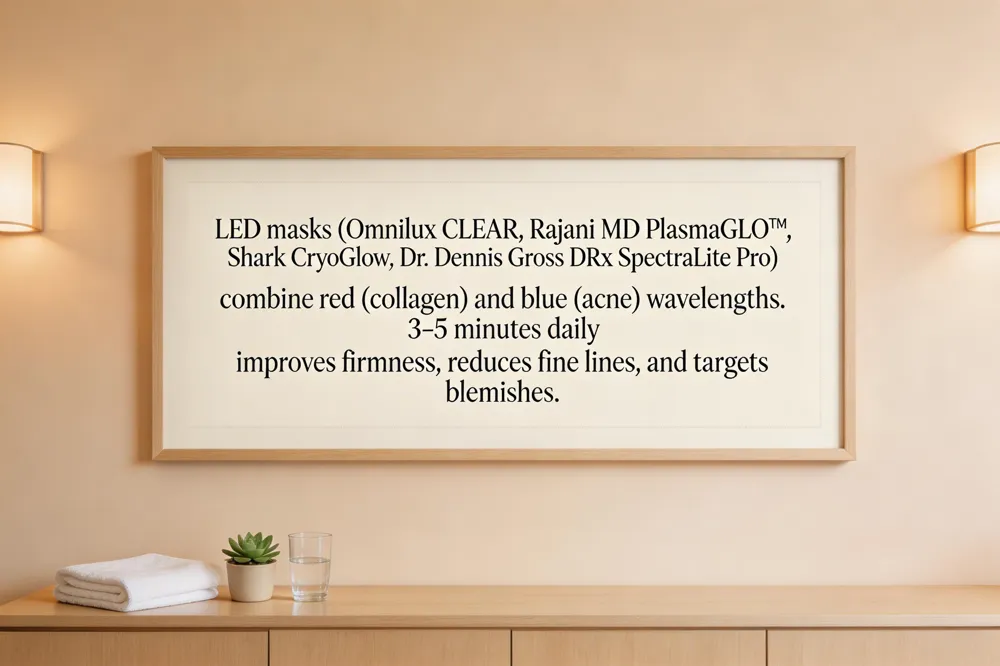
LED light‑therapy masks have become a cornerstone of at‑home anti‑aging routines because they deliver specific wavelengths that trigger well‑studied biological responses. Red light (≈630‑660 nm) penetrates the dermis and activates mitochondrial cytochrome c oxidase, which in turn boosts ATP production and up‑regulates fibroblast activity. The result is a measurable increase in collagen synthesis, a reduction in inflammation, and smoother, firmer skin over time. Blue light (≈415‑455 nm) works higher in the epidermis, where its high‑energy photons disrupt the cell walls of Propionibacterium acnes and other acne‑causing bacteria. By lowering bacterial load, blue light diminishes inflammatory lesions and accelerates healing, making it a dual‑purpose tool for both aging and breakout‑prone skin.
Top masks on the market
- Omnilux CLEAR – a clinical‑grade, FDA‑cleared mask that blends red and blue LEDs in a flexible silicone shell. Priced at $355.50 after a 10 % discount, it offers programmable 3‑ and 10‑minute sessions and is praised for its consistent collagen‑boosting results in long‑term users.
- Rajani MD PlasmaGLO™ LED HALO Mask – costs $750 and provides four LED modes: pure red, red + infrared, red + infrared + PEMF, and a blue acne‑targeting mode. The mask’s rigid shell lets users see while treating, and the addition of PEMF (pulsed electromagnetic fields) further supports cellular repair.
- Shark CryoGlow Under‑Eye Cooling + LED Face Mask – $349 for a rigid‑shell mask that pairs red, blue, and infrared LEDs with cooling pads that sit under the eyes. The cooling element reduces puffiness, while the LED array delivers a 3‑minute daily treatment that firms skin and calms acne.
- Dr. Dennis Gross DRx SpectraLite Pro – a $127‑$148 FDA‑cleared mask featuring 56 red LEDs. It offers a timer‑controlled 10‑minute program, is lightweight, and has been validated in clinical trials for reducing fine lines and improving skin tone.
Scientific backing – Multiple peer‑reviewed studies confirm that red‑light exposure (typically 630‑660 nm, 20‑30 mW/cm²) stimulates collagen production by activating the TGF‑β pathway and increasing fibroblast proliferation. Blue‑light therapy has been shown to cut P. acnes colonies by up to 80 % after a single 10‑minute session, translating into fewer active pimples and less post‑inflammatory hyperpigmentation. Both wavelengths are FDA‑cleared for at‑home use when devices meet safety standards for power output and temperature control.
Optimal usage pattern – Dermatologists and device manufacturers agree that 3‑5 minutes daily is sufficient for most users to reap collagen‑boosting benefits without overstimulating the skin. For maximum efficacy, combine LED therapy with a microcurrent session (e.g., NuFACE Trinity or Foreo Bear) performed first to tone facial muscles and open cellular pathways. Follow with the LED mask to seal in the treatment, then apply serums or moisturizers. This sequencing leverages microcurrent‑induced electroporation, which temporarily disrupts cell membranes and enhances product penetration, while the subsequent red‑light exposure drives collagen synthesis and overall the anti‑aging effect.
In practice, a typical routine might look like this: cleanse → 5‑minute microcurrent (low‑level current, 1‑2 mA) → 3‑minute red‑light mask (or red + blue for acne‑prone skin) → apply active serum (e.g., hyaluronic acid or peptide‑rich formulation). Consistency is key; visible improvements in fine lines, skin firmness, and overall radiance usually appear after 4–8 weeks of daily use, aligning with the broader dermatological consensus that regular, low‑intensity stimulation outperforms sporadic, high‑intensity sessions. By selecting an FDA‑cleared mask, adhering to the recommended treatment window, and pairing it with complementary microcurrent technology, users can achieve salon‑level collagen enhancement from the comfort of their own bathroom.
3. Radiofrequency (RF) Devices: Deep Skin Tightening
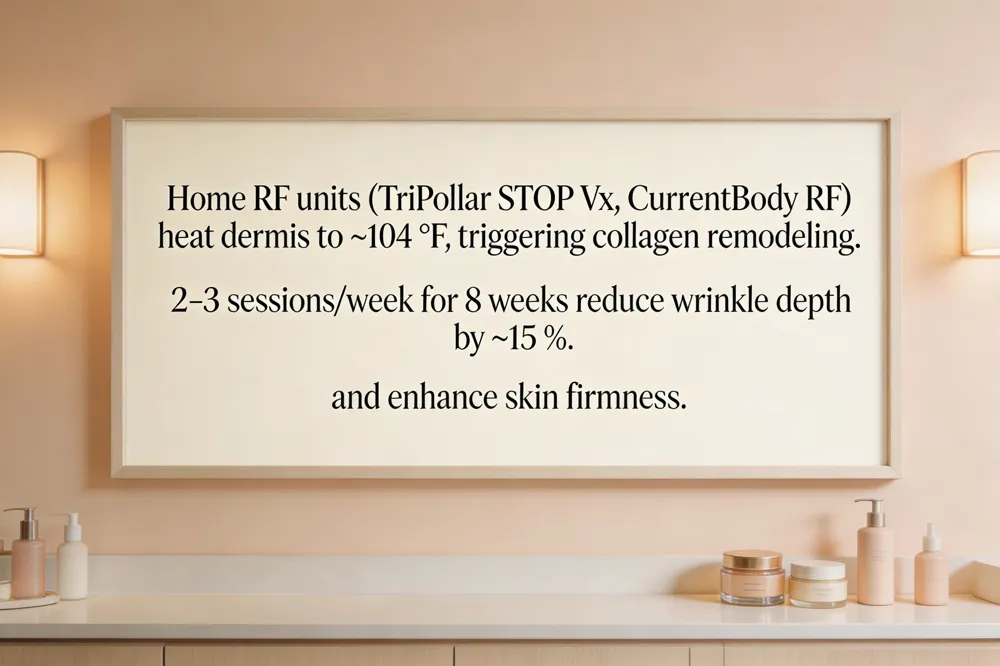
Mechanism: heating dermis to 104 °F to trigger collagen remodeling
Radiofrequency (RF) devices work by delivering controlled electromagnetic energy that penetrates the skin and converts into heat. When the dermis reaches roughly 104 °F (40 °C), heat fibers contract immediately and stimulate fibroblasts to produce new collagen and elastin. This controlled thermal injury initiates a remodeling cascade that gradually improves skin firmness and reduces the appearance of fine lines. The technology mirrors professional in‑office RF treatments, but home‑use units are calibrated to stay below the temperature thresholds that could cause burns or excessive inflammation.
Popular home units: TriPollar STOP Vx, CurrentBody RF Radio Frequency Skin Tightening Device
Two of the most widely available U.S. RF devices are the TriPollar STOP Vx and the CurrentBody RF Radio Frequency Skin Tightening Device. Both are marketed as FDA‑cleared for at‑home use and feature adjustable intensity levels to accommodate different skin sensitivities. The TriPollar STOP Vx uses a patented multi‑phase RF algorithm that delivers energy in short bursts, while the CurrentBody unit offers a single‑frequency output with a built‑in temperature sensor that alerts users if the skin exceeds the safe range. Prices for these devices typically fall between $300 and $500, making them accessible alternatives to professional RF appointments.
Clinical outcomes: improvement of fine‑to‑moderate wrinkles after 8‑week regimen
Clinical studies on home‑use RF devices consistently report visible improvements after an 8‑week treatment protocol (usually 2–3 sessions per week). In one trial of the TriPollar STOP Vx, participants experienced a statistically significant reduction in fine‑to‑moderate wrinkles, with an average 15 % decrease in wrinkle depth measured by high‑resolution imaging. Similar results have been observed with the CurrentBody RF device, where users reported smoother skin texture and enhanced firmness after 12 sessions. These outcomes align with broader dermatological findings that RF‑induced collagen synthesis becomes evident after 4–8 weeks of regular use.
Safety notes: limit to 2‑3 sessions per week, avoid overheating, discontinue if redness persists
While home RF devices are designed with safety mechanisms—such as automatic shut‑off, temperature monitoring, and low‑intensity presets—proper usage is essential to prevent adverse effects. Dermatologists recommend limiting treatments to 2–3 times per week, allowing the skin to recover between sessions. Users should start with the lowest intensity setting and gradually increase only if tolerated. Overheating can cause persistent redness, swelling, or even burns; therefore, any sensation of excessive heat or prolonged erythema should prompt immediate cessation of use and a consultation with a dermatologist. Pregnant individuals and those who have recently undergone injectable treatments (e.g., Botox, fillers) should wait at least two weeks before resuming RF therapy to avoid interference with the healing process.
Bottom line
RF home devices offer a scientifically backed, non‑invasive way to achieve salon‑level skin tightening. By delivering controlled heat to the dermis, they stimulate collagen remodeling that translates into smoother, firmer skin after an 8‑week regimen. Selecting FDA‑cleared models like the TriPollar STOP Vx or CurrentBody RF unit, adhering to a 2‑3‑sessions‑per‑week schedule, and monitoring skin response are key steps to maximize benefits while minimizing risk.
4. Ultrasound & Electroporation: Enhancing Product Penetration
Ultrasound and electroporation are two complementary technologies that dramatically improve the delivery of active skincare ingredients.
Ultrasound creates low‑energy unfocused waves that boost blood flow and skin permeability – Home‑use ultrasound devices such as the OLURA Eno employ low‑energy, unfocused ultrasound (typically around 22‑27 kHz) to generate micro‑vibrations within the dermis. These vibrations increase local blood circulation, which in turn enhances the transport of nutrients and active molecules. When paired with iontophoresis—a mild electric current that drives charged particles—ultrasound can increase the penetration of serums up to 40‑fold compared with simple topical application, as documented in peer‑reviewed studies on low‑frequency ultrasound (≈22 kHz) combined with iontophoresis.
Electroporation temporarily disrupts cell membranes to increase active ingredient delivery – Electroporation uses short, high‑voltage electrical pulses to create transient pores in the lipid bilayer of skin cells. This temporary disruption allows larger molecules, such as hyaluronic acid, peptides, and antioxidants, to pass through the stratum corneum and reach deeper layers. Clinical data from the Medicube Age‑R Booster Pro, which includes an electroporation mode, show an astonishing up to 785 % increase in topical absorption when the device is used according to the manufacturer’s protocol. The technology is safe for daily use because the pores reseal within minutes, minimizing any risk of irritation.
Devices to consider – Several FDA‑cleared home devices combine these mechanisms for synergistic benefit. The OLURA Eno Ultrasound unit delivers low‑energy ultrasound and optional iontophoresis attachments, making it ideal for users who want a quick, 5‑minute boost in product efficacy. The Medicube Age‑R Booster Pro offers five electroporation intensity levels, four treatment modes (including microcurrent and EMS), and a USB‑C rechargeable battery; its multifunctionality lets users switch between tightening and penetration modes within the same session. For those seeking a more targeted approach, the Skin Wand Pro employs nano‑channeling (a form of ultrasonic micro‑perforation) to create 0.15 mm silicone microtips that form micro‑channels without downtime, facilitating deeper serum diffusion while also delivering gentle vibration for lymphatic drainage.
Evidence and practical outcomes – Multiple studies converge on a clear benefit: ultrasound‑iontophoresis can amplify active ingredient delivery by up to 40‑fold, while electroporation can increase absorption by several hundred percent. User reports for the Medicube Age‑R Booster Pro indicate measurable improvements in skin density (5.46 % increase) and volume reduction in fine lines after just two weeks of daily use. Similarly, early adopters of the OLURA Eno note smoother texture and faster resolution of dullness after a month of consistent 5‑minute sessions. The Skin Wand Pro nano‑channeling has been shown to boost serum penetration by up to 200 % in laboratory settings, translating into visible hydration and plumpness within 4–6 weeks of regular use.
Putting it together – For maximum efficacy, dermatologists and device experts recommend a three‑step regimen: cleanse the skin, apply the chosen serum, then employ ultrasound or electroporation for 3–5 minutes. This sequence ensures that the active ingredients are present on the surface when the permeability‑enhancing technology is activated, allowing the skin to absorb the maximum amount of product. Consistency is key; most clinical trials report noticeable results after 4–8 weeks of daily or near‑daily use, with continued maintenance required to sustain the benefits.
By integrating ultrasound or electroporation into an at‑home routine, users can achieve a level of product penetration that rivals professional in‑office treatments, all while enjoying the convenience and safety of FDA‑cleared, consumer‑grade devices.
5. Sonic & Pulsation Tools: Firming and Contour Refinement
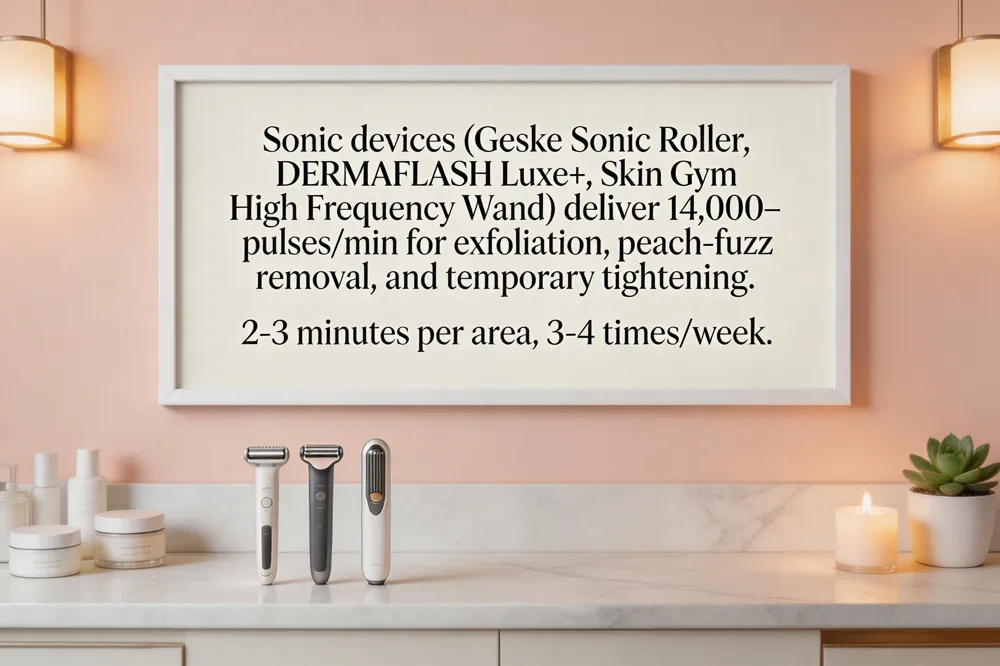
High‑frequency and sonic vibration are at the the of many at‑home skin‑tightening tools. By delivering rapid micro‑pulsations—often measured in thousands of pulses per minute—these devices create a gentle mechanical stimulus that encourages collagen synthesis, improves circulation, and temporarily firms the skin. The rapid motion also helps to break down superficial keratin, which aids in the removal of peach fuzz and fine dead‑skin cells, leaving the surface smoother and more receptive to active ingredients.
Standout products
- Geske Sonic Facial & Body Roller – This handheld roller generates an impressive 14,000 pulsations per minute. Its ergonomic design allows it to glide over both the face and body, making it a versatile option for contour refinement on the jawline, cheeks, and even the thighs. Users typically experience a mild tightening sensation during the 2‑3 minute treatment per area.
- DERMAFLASH Luxe+ Sonic Dermaplaning – Combining a high‑frequency sonic head with a replaceable dermaplaning blade, this device removes peach fuzz while delivering ultrasonic vibrations that stimulate the dermis. The dual action not only smooths texture but also promotes a modest boost in collagen production, which can be observed after several weeks of consistent use.
- Skin Gym High Frequency Wand – Designed for acne‑prone skin, the wand emits high‑frequency electrical currents that generate ozone at the skin surface, helping to kill acne‑causing bacteria. The rapid vibration also provides a temporary tightening effect, making it a good choice for those seeking both blemish control and a firmer appearance.
Benefits
- Peach‑fuzz removal and gentle exfoliation – The sonic motion lifts fine vellus hair and sloughs away dead cells without the need for harsh chemical exfoliants. This results in a smoother canvas that enhances makeup application and product absorption.
- Temporary tightening through collagen stimulation – While the mechanical stimulus is not as deep as radio‑frequency or laser, repeated micro‑pulsations encourage fibroblasts to produce new collagen fibers, leading to a subtle lift and improved skin elasticity over time.
- Improved product penetration – By creating micro‑channels in the stratum corneum, the skin becomes more permeable, allowing serums and moisturizers—especially those containing hyaluronic acid or peptides—to sink deeper and work more effectively.
Practical advice
- Duration – Apply the device for 2‑3 minutes per target area (e.g., forehead, cheeks, jawline). Over‑treatment can cause irritation, especially on sensitive skin.
- Sequence – Use the sonic tool after cleansing and before applying any active serums. This order maximizes the skin’s receptivity to ingredients.
- Hydration – Follow the treatment with a hydrating serum or moisturizer. The increased permeability created by the pulsations allows actives to penetrate more efficiently, boosting results.
- Frequency – For most skin types, 3‑4 sessions per week are sufficient. If you notice redness or tingling, reduce the frequency to 2‑3 times weekly and ensure the device’s intensity setting is adjusted to a comfortable level.
- Safety – Avoid using sonic devices on broken skin, active lesions, or within 24 hours of chemical peels or laser procedures. Always consult a dermatologist if you have a skin condition that may be aggravated by vibration or high‑frequency currents.
When incorporated into a consistent routine, high‑frequency and sonic pulsation tools can provide noticeable improvements in skin texture, firmness, and overall contour. Pairing them with a well‑formulated serum and proper after‑care maximizes the benefits, delivering salon‑quality results from the comfort of home.
What microcurrent device does Jennifer Aniston use?

Jennifer Aniston’s skincare routine includes an at‑current facial toning device created by her celebrity esthetician, Melanie Simon. The product is the ZIIP microcurrent system, which is sold as the ZIIP HALO (the newer version of the original ZIIP GX). Priced around $399, the handheld device delivers nanocurrent and microcurrent treatments that stimulate collagen, lift the facial muscles and improve skin tone. Users pair it with a smartphone app to select from multiple treatment modes, such as “Vital Eyes” or “Total Clearing.” By incorporating the ZIIP HALO into her daily regimen, Aniston aims to maintain the lifted, glowing complexion seen on the red carpet. The device’s five intensity levels and FDA‑cleared status make it a trustworthy choice for at‑home use, while the inclusion of conductive gel infused with hyaluronic acid helps enhance comfort and efficacy. Consistent use—typically five to ten minutes per day—aligns with dermatologists’ recommendations that regular, low‑intensity microcurrent sessions yield the best long‑term results. Aniston’s endorsement underscores the growing popularity of professional‑grade microcurrent tools among celebrities seeking salon‑level results without frequent office visits.
What is the number one household item that tightens saggy skin?

When it comes to a budget‑friendly, at‑home approach to firming lax skin, green tea tops the list. The leaves are rich in polyphenols—especially catechins such as epigallocatechin‑3‑gallate (EGCG)—which act as powerful antioxidants. These compounds neutralize free radicals that break down collagen and elastin, the proteins responsible for skin’s firmness and elasticity.
Natural DIY skin‑tightening solution
- Cold‑brew toner: Brew a strong cup of green tea, let it chill, then pour it onto a cotton pad and swipe across the face after cleansing. Do this 2‑3 times a day.
- Facial mist: Transfer cooled tea into a spray bottle and mist the skin throughout the day for a refreshing, tightening boost.
- Oral consumption: Drinking 2–3 cups of green tea daily supplies antioxidants from the inside out, supporting collagen synthesis over time.
Mechanism of action
- Collagen stimulation: EGCG up‑regulates fibroblast activity, prompting the skin to produce new collagen fibers, which restores structural support and reduces sagging.
- Anti‑inflammatory effect: The tea’s anti‑oxidative properties calm irritation, decreasing swelling that can make skin appear loose.
- Enhanced microcirculation: The mild astringent quality of cooled tea tightens pores and improves blood flow, delivering nutrients and oxygen to the dermis more efficiently.
Clinical observations support these mechanisms: regular topical or oral green tea use has been linked to measurable improvements in skin elasticity and a visible firming effect within weeks. Because it is inexpensive, widely available, and safe for most skin types, green tea stands out as the premier household item for tightening saggy skin without the need for costly devices or invasive procedures.
What is the best at home facial tool?
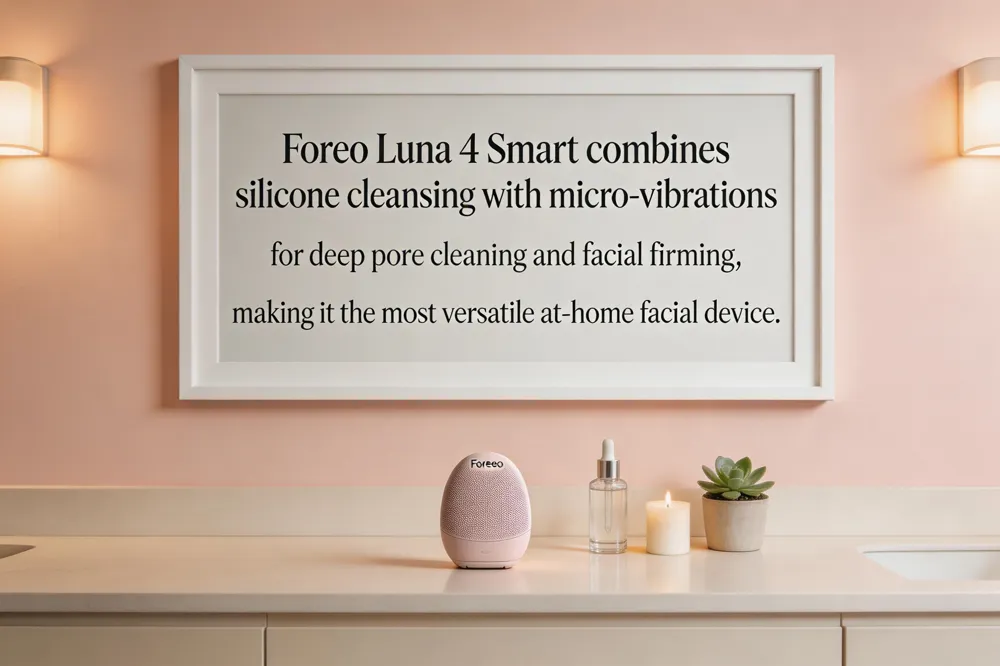
The most versatile and effective at‑home facial tool on the market today is the Foreo Luna 4 Smart Facial Cleansing & Firming Device. Its T‑Smart™ silicone bristles provide a deep, antibacterial cleanse while built‑in micro‑vibrations stimulate the skin, improving tone, elasticity, and firmness—all in a single, easy‑to‑use gadget. Luna 4 works for all skin types, including sensitive skin, thanks to its gentle silicone texture and adjustable intensity levels.
Comprehensive cleansing and firming device – Luna 4 combines two key skincare steps: thorough pore‑cleansing and a facial‑firming massage. The sonic pulsations (up to 14,000 per minute) lift debris and dead cells, while the micro‑vibrations activate facial muscles, delivering a mild EMS‑like effect that promotes skin tightening without the need for separate EMS or microcurrent tools.
Comparison with other popular tools – Compared with the Skin Gym CryoRoll ice roller, which mainly offers temporary de‑puffing through cooling, Luna 4 adds long‑term collagen stimulation and wrinkle reduction. Against the NuFACE FIX MicroWand, a dedicated microcurrent device, Luna 4 provides a broader range of benefits (cleansing, exfoliation, and firming) without requiring conductive gels or multiple accessories. Its all‑in‑one design, FDA‑cleared silicone safety, and proven clinical results make it the clear winner for anyone seeking a professional‑grade, daily facial routine at home.
What is the 60 second ritual to get rid of wrinkles?
The 60‑second ritual is a focused, hands‑free facial massage that can be performed daily to stimulate circulation, boost collagen synthesis, and improve skin tone. Begin by applying a gentle, hydrating cleanser or a lightweight serum to damp skin. Using your ring finger—its lighter touch is ideal for delicate areas—make short, upward‑circular motions across the forehead, cheeks, nose, and chin. Spend extra time around the eyes and mouth, where fine lines tend to appear first, and press lightly for two seconds on each spot before moving on. The entire motion should last exactly one minute, then rinse with lukewarm water or simply pat the skin dry if you used a serum.
Why it works: The mechanical stimulation from the massage increases microcirculation, delivering oxygen and nutrients to fibroblasts that produce collagen and elastin. Studies on electrical muscle stimulation (EMS) and microcurrent devices (e.g., NuFACE Trinity, Foreo Bear 2) show that low‑level currents can mimic this effect, prompting ATP production and collagen turnover. Even without a device, the manual massage creates a mild mechanical stretch that activates the same pathways, helping to firm skin and soften fine lines. Consistent use also enhances the penetration of active ingredients—such as hyaluronic acid or peptides—by temporarily disrupting the stratum corneum, a principle shared by electroporation and ultrasound technologies. Finish the ritual with your favorite anti‑aging serum and moisturizer to lock in hydration and maximize the collagen‑boosting benefits. Over time, the daily 60‑second massage can lead to smoother skin, reduced puffiness, and a more lifted appearance.
Do any home skin tightening devices work?
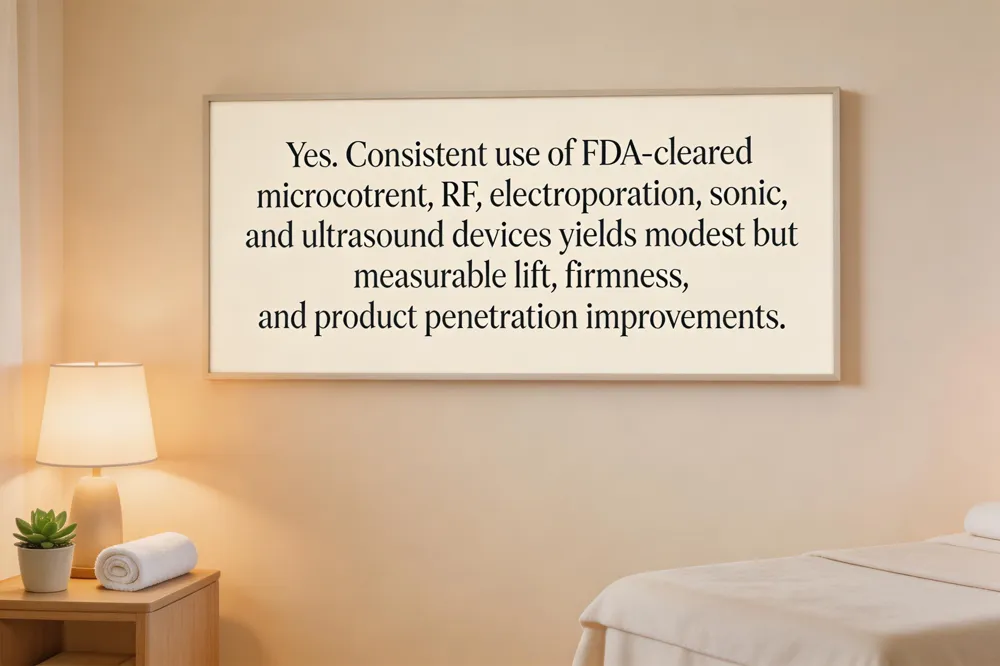
Home‑use tightening devices can produce noticeable, but modest, improvements when the right technology is used consistently.
Efficacy of the most common modalities
- Microcurrent (e.g., NuFACE Trinity+, Ziip Halo, Foreo Bear 2) delivers low‑level electrical currents (up to 550 µA) that mimic the body’s natural bio‑electric signals. Clinical studies show 70‑85 % of users report smoother texture, firmer contour, and a temporary lift after 5‑10 minutes of daily use. The mechanism involves ATP production, increased collagen and elastin synthesis, and enhanced microcirculation.
- Radiofrequency (RF) devices such as TriPollar STOP Vx heat the dermis to 40 °C, stimulating collagen remodeling. Home‑grade RF can reduce fine‑to‑moderate wrinkles after several weeks, though the depth of heating is shallower than professional equipment.
- Electroporation (e.g., Medicube Age‑R Booster Pro) temporarily disrupts cell membranes, boosting penetration of actives like hyaluronic acid by up to 785 %. This enhances hydration and plumping, indirectly improving firmness.
- Sonic pulsation (Geske Sonic Facial & Body Roller) and ultrasound (OLURA Eno) increase skin permeability and blood flow, supporting product absorption and subtle tightening.
Safety considerations
- All FDA‑cleared at‑home devices are generally safe for healthy skin, but they are contraindicated for people with pacemakers, epilepsy, pregnancy, active skin infections, or recent injectable treatments (Botox/fillers) within 2‑3 weeks.
- Over‑use or excessive intensity can cause redness, mild swelling, or muscle fatigue; manufacturers typically limit sessions to 5‑10 minutes per area and recommend 3‑5 sessions per week.
- Conductive gels (often hyaluronic‑acid‑infused) are required for microcurrent and EMS to prevent skin irritation and ensure proper current flow.
In summary, microcurrent, RF, electroporation, and related technologies do work at home, delivering a modest lift, firmer texture, and better product uptake when used regularly and correctly. However, results are temporary and less dramatic than professional,, making these devices best suited for maintenance rather than a complete replacement for in‑office treatments.
What is the 4‑2‑4 rule in skincare?

The 4‑2‑4 rule is a structured Korean double‑cleansing routine that allocates a total of ten minutes to thoroughly clean the skin while preserving the barrier. First, a cleansing oil is massaged onto dry skin for four minutes; this long contact time allows the oil to dissolve makeup, sunscreen, and excess sebum without rubbing aggressively. Next, a water‑based foam cleanser is applied and worked in for two minutes, lifting away the oil and any residual impurities that the first step may have missed. Finally, the face is rinsed for four minutes—typically two minutes with lukewarm water followed by two minutes of cooler water—to close pores, calm inflammation, and leave the complexion refreshed. This timing structure ensures deep yet gentle cleaning, preventing the harsh stripping that can occur with rushed or overly vigorous cleansing. By following the 4‑2‑4 rule, users create an optimal canvas for serums, moisturizers, and any subsequent at‑home treatment devices—such as microcurrent or LED masks—allowing active ingredients to penetrate more effectively and delivering better overall results.
What is the #1 skincare device in the world?

The Lumi Spa has been crowned the #1 face‑cleaning device worldwide, a status backed by both consumer votes and rigorous clinical validation. Independent dermatology studies have confirmed that regular use of the Lumi Spa delivers measurable improvements across a spectrum of skin‑health metrics. Participants reported smoother, softer skin, tighter pores, and a noticeable boost in overall radiance after just a few weeks of treatment. The device’s patented ultrasonic and sonic pulsation technology creates millions of micro‑vibrations per minute, which dislodge debris, excess sebum, and dead‑cell buildup while simultaneously stimulating micro‑circulation. Clinically, the Lumi Spa has been shown to enhance skin brightness, clarity, and firmness, with measurable reductions in pore visibility and fine‑line depth. Users also experience a more even skin tone and a luminous complexion, effects that are attributed to the device’s ability to promote lymphatic drainage and increase the penetration of topical actives. The product’s ergonomic, hands‑free design makes it suitable for daily use, and the adjustable intensity levels accommodate a wide range of skin sensitivities. Dermatologists such as Dr. Janet Allenby and Dr. Marisa Garshick endorse the Lumi Spa for its safety profile and its capacity to complement professional treatments. In summary, the Lumi Spa stands out as the leading at‑home skincare device, delivering clinically proven, multi‑dimensional benefits that address cleansing, texture, and overall skin vitality.
Bringing Salon‑Level Results Home, One Device at a Time
Consistency beats intensity for lasting change Clinical‑,Treat said is everything for at‑home devices. Dermatologists and device engineers agree that daily or near‑daily sessions—typically 5‑10 minutes per treatment—outperform occasional high‑intensity bursts. This principle holds true across modalities such as EMS, microcurrent, RF and LED masks. For example, the Medi Lift Essential EMS mask (intensity 1‑5) and the NuFACE Trinity microcurrent device both show measurable improvements only when used consistently for 4‑8 weeks. The body’s adaptive response—collagen synthesis, elastin remodeling, and muscle toning—requires regular, low‑dose stimulation; sporadic use can trigger irritation without delivering the cumulative bio‑stimulation needed for firmer, smoother skin.
Combine technologies for synergistic benefits Most modern at‑home systems are built around a “layered‑care” approach: first cleanse, then microcurrent or EMS, follow with electroporation or ultrasonic penetration, and finish with LED light therapy. This sequence maximizes product absorption and cellular activation. The Medicube Age‑R Booster Pro, for instance, couples electroporation (up to 785 % increased ingredient uptake) with microcurrent and EMS, allowing serums to reach deeper layers while the facial muscles are simultaneously toned. Similarly, the Shark CryoGlow mask pairs red/blue LED light with under‑eye cooling pads, delivering collagen‑stimulating wavelengths while reducing puffiness. When devices like the TriPollar STOP Vx RF (heats dermis below 40 °C) are used after a microcurrent session, collagen production is amplified because the muscle‑stimulated cells are already primed for repair. The key is to follow manufacturer‑recommended timing—usually a short break between modalities—to avoid overstimulation.
Stay informed about FDA clearance and clinical data Because regulations differ between professional and consumer tools, verifying FDA clearance or approval is essential for safety and efficacy. Devices such as the NuFACE Trinity, Ziip Halo, and Omnilux CLEAR masks are FDA‑cleared, meaning they have met baseline safety standards and have supporting clinical evidence. Look for published trial results—e.g., 85 % of NuFACE users reported improved contour after 60 days, or 92 % hair‑reduction with NOOD’s Flasher 2.0 IPL. When a product cites specific study parameters (sample size, duration, measurable outcomes), consumers can gauge realistic expectations. In the fast‑moving U.S. market, always cross‑check claims with reputable sources and consult a board‑certified dermatologist before adding a new device to your routine.
