

Anxiety disorders are the most common mental health condition worldwide, affecting an estimated 301 million people, according to the World Health Organization. For many, the first-line treatments—medication and therapy—provide relief, but a substantial number don't respond fully. That persistent gap has driven interest in neuromodulation approaches, including vagus nerve stimulation, which aims to influence the body's autonomic nervous system directly.
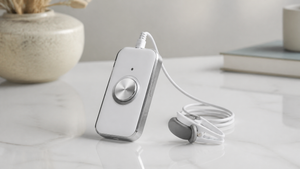
The Tidesmit Vagus Nerve Stimulator is one of the at-home devices that has entered this space, offering a non-invasive way to target the vagus nerve. It's designed around the concept of transcutaneous vagus nerve stimulation (tVNS), a method that sends mild electrical pulses through the skin of the ear to activate nerve fibers. But how exactly does it work, and what does the science say about its potential for anxiety relief? Let's walk through the mechanism, the evidence, and the practical realities.
What Is Vagus Nerve Stimulation and How Does It Relate to Anxiety?
Imagine a nerve that wanders from your brainstem down through your neck, chest, and abdomen—touching your heart, lungs, and gut along the way. That's the vagus nerve, a core component of the parasympathetic nervous system, often called the "rest and digest" branch. When it's working well, it helps slow your heart rate, ease digestion, and bring a sense of calm. But in anxiety disorders, that calming signal can get drowned out by the sympathetic "fight or flight" response.
Transcutaneous vagus nerve stimulation, or tVNS, is a non-invasive technique that uses a small electrode placed on the ear—typically at the cymba conchae, a spot rich in vagal nerve endings. The idea is to stimulate the nerve without surgery, unlike the implanted vagus nerve stimulators used for epilepsy or depression. The link to anxiety comes from Polyvagal Theory, which suggests that the vagus nerve helps regulate social engagement and threat responses. When vagal tone is low, the body may stay in a state of high alert, a pattern researchers have observed in anxiety disorders. A meta-analysis of 36 studies (Chalmers et al., 2014) found that reduced heart rate variability—a marker of vagal tone—had a moderate-to-large effect size in people with anxiety, confirming that autonomic dysregulation is a real physiological feature, not just a feeling.
The Scientific Evidence Behind tVNS for Anxiety Relief
If you're used to the slow, incremental progress of anxiety treatments, the tVNS findings might catch your attention. A single session has been shown to reduce state anxiety in people with PTSD (Lamb et al., 2017), and two weeks of daily use in older adults produced measurable improvements in mood and autonomic function (Bretherton et al., 2019). But the evidence is a mixed bag, and the picture gets more nuanced the closer you look.
Physiological measures—like heart rate variability, startle reflex, and skin conductance—tend to shift more reliably than what people report on questionnaires. In other words, the device may be nudging the nervous system even when the subjective experience of anxiety doesn't change dramatically. Neuroimaging studies point to why: tVNS activates brain regions like the prefrontal cortex and the locus coeruleus, which are involved in attention and emotional regulation (Badran et al., 2018; Kraus et al., 2013). Yet the studies are small, usually 20 to 60 participants, and a critical review by Yap et al. (2020) warns that publication bias might inflate the apparent benefits. There's also the sobering reality that 30–40% of patients don't get adequate relief from first-line treatments (Bandelow et al., 2017), so tVNS is often explored as an add-on, not a replacement. The evidence is promising in a lab setting, but the leap to everyday use is still a work in progress.
How the Tidesmit Vagus Nerve Stimulator Works
The Tidesmit Vagus Nerve Stimulator is a handheld device that clips onto the ear, targeting the vagus nerve's auricular branch. It's built around the same tVNS principle used in clinical studies, but intended for at-home use. The device's handle highlights several goals: improving heart rate variability, supporting sleep optimization, and promoting parasympathetic activation and emotional balance. Its standout feature is a precise pulse width of 0.5 milliseconds, which shapes how the nerve fibers respond.
0.5ms Precision for Targeted Nerve Stimulation
Pulse width matters in tVNS because it determines which nerve fibers are recruited. A 0.5ms pulse is wide enough to engage the thicker, myelinated A-beta fibers that carry tactile and proprioceptive signals, but may avoid the thinner, unmyelinated C fibers that transmit pain. This selectivity could explain why the Tidesmit device is designed to support HRV improvement and emotional balance without causing discomfort. The precision is not just a technical spec—it's a way to dial in on the parasympathetic pathways that are often underactive in chronic stress.
The manufacturer positions the device as a tool for daily use, but it's important to follow the included guidelines. No specific protocol is guaranteed to work for everyone, and the device isn't FDA-cleared for treating anxiety. Still, the 0.5ms setting aligns with the approach used in several research protocols, where controlled pulse widths avoid the startle-like response that can come from stronger stimulation. For someone looking to explore tVNS at home, that level of control is a practical advantage.
Potential Risks and Limitations of At-Home Vagus Nerve Stimulation
tVNS is generally well tolerated, with mild side effects like temporary skin irritation, headache, or nausea—but these are uncommon. The bigger concern is the unknown. As Yap et al. (2020) point out, long-term safety data is sparse, and the studies are too short to rule out subtle effects over months or years. If you have a heart condition, epilepsy, or a pacemaker, the electrical stimulation could pose risks, so a doctor's input is non-negotiable. Even for healthy users, the device is not a substitute for professional care, and it's wise to start with low intensity and short sessions while you gauge your body's response.
Practical Tips for Using a Vagus Nerve Stimulator
Placement is the first thing to get right. Most studies target the cymba conchae—the inner ridge of the ear just above the ear canal—because that's where vagal nerve endings are most accessible. A mirror helps, and so does cleaning the skin first to ensure good electrode contact. Start with 15- to 30-minute sessions, especially if you're new to tVNS, and increase gradually as your tolerance builds. The Bretherton et al. (2019) study had participants use the device daily for two weeks, and consistency seemed to matter more than duration. A single session might briefly lower anxiety (Lamb et al., 2017), but the cumulative effect is what you're after. And remember: tVNS is a tool, not a cure. It works best alongside therapy, exercise, or other strategies that address the root causes of anxiety.
Frequently Asked Questions About Vagus Nerve Stimulation for Anxiety
Can vagus nerve stimulation replace medication for anxiety?
No, tVNS is not a replacement for medication. It may serve as an adjunct for those who don't respond fully to first-line treatments—about 30–40% of patients, according to Bandelow et al. (2017)—but studies directly comparing tVNS to SSRIs or benzodiazepines are lacking. Any change to medication should be discussed with a prescribing doctor.
How long does it take to see results from tVNS?
Bretherton et al. (2019) reported improvements after two weeks of daily use in older adults, but individual responses vary. Some people notice a subtle shift in calmness after a single session, while others may need weeks. The physiological effects on HRV often appear sooner than subjective mood changes, so patience is key.
Is the Tidesmit device safe to use daily?
Daily use was studied in the Bretherton et al. (2019) trial without major adverse events, and the Tidesmit device is designed for at-home sessions. However, limited long-term data exists, so anyone with a medical condition should consult a doctor first. Start with the lowest intensity and follow the manufacturer's instructions.
