
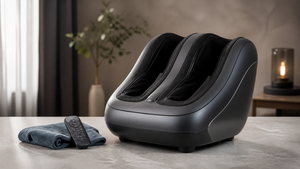

For many people, the ache in tired legs and feet after a long day isn’t just a passing discomfort—it’s a signal that recovery didn’t happen. The Tidesmit Electric Leg Foot Massager steps into that gap with a focused, deep-tissue approach that targets the calves and soles, rather than the full leg. It’s a different proposition from the air compression boots that dominate recovery conversations, and it makes a trade-off that will matter to anyone who wants relief without a full-leg setup.
What’s immediately clear is that this massager isn’t trying to mimic the experience of boots. It uses a kneading-based mechanism, often described as Shiatsu-style, to work on the muscle groups that take the most daily punishment. Whether that’s enough for your routine depends on what you need from a recovery tool.
The Quick Verdict
The Tidesmit massager is best suited for people whose primary discomfort sits in their feet and calves—those who stand for hours, travel frequently, or simply want a targeted session without wrangling a full compression system. Its strength lies in the combination of focused deep-tissue massage and, in many versions, a warmth function that can help muscles relax.
Notable strengths include:
- Direct, kneading massage that reaches the arches and calves
- Heat integration for added comfort
- Simpler setup than full-leg compression boots
The main trade-offs are limited coverage—it doesn’t address the thighs or knees—and a massage intensity that may feel too mild for those accustomed to high-pressure devices. For targeted relief, especially after a day on your feet, the Tidesmit is a practical choice. If you need full-leg compression or app-controlled patterns, you’ll likely look elsewhere.
Who Should Buy the Tidesmit Leg and Foot Massager
The ideal user isn’t hard to picture. Think of someone with tired legs after travel, or feet that ache from a long shift. The Tidesmit massager is built for those moments when the discomfort is concentrated below the knee. It’s a recovery tool for people who don’t want to strap into a full boot system but still want more than a foam roller can offer.
Common pain points like “tired legs after extended standing” and the stiff, heavy feeling that follows a long flight are exactly where this device fits. The heat function, if present, adds a layer of comfort that can make a session feel less like a chore and more like a reset. It’s also a good option for anyone who finds compression boots too cumbersome or time-consuming to set up.
On the other hand, the Tidesmit won’t satisfy users who need relief in the upper legs or those who prefer the rhythmic squeeze of air compression. If you’re dealing with whole-leg fatigue or expect a very firm, sports-massage intensity, the focused design may leave you wanting more coverage and pressure.
Design and Features
The Tidesmit massager typically wraps around the lower leg and foot, with a shape that’s meant to be slipped on and adjusted for a snug fit. The materials are often a mix of fabric and cushioned padding, and the controls are straightforward—usually a handheld remote or a panel built into the unit that lets you cycle through modes and intensity levels. This simplicity is a deliberate choice; you’re not forced to navigate a phone app or a complex menu, which can be a relief when all you want is to sit down and start a session.
Key features, based on the product’s specifications, include multiple intensity levels, a heat function, and a massage mechanism that uses kneading nodes to simulate the pressure of a massage therapist’s thumbs. The heat is a quiet but important addition. It’s not aggressive, but it can help loosen tight muscles and make the deep-tissue action feel more effective. The massager’s size and corded design mean it’s not the most portable option, but it’s compact enough to store beside a chair or bed.
Comfort during use is generally high, provided you position it correctly. The inner padding helps distribute pressure, and the heat warms up gradually, so there’s no sudden shock. The controls are easy to operate even with your eyes closed, which counts for something when you’re trying to unwind.
Performance for Deep Tissue Recovery
The massage mechanism relies on a combination of kneading and rolling—commonly described as Shiatsu-style—to dig into the arches and calves. The intention is to reach deeper layers of muscle, not just to provide a surface-level vibration. The nodes move in a pattern that mimics the pressure of thumbs and knuckles, and the heat function, when active, can help increase blood flow in the area. For many users, the result is a noticeable reduction in the heavy, tight sensation that follows a long day on hard floors.
Intensity levels are adjustable, so you can start gently and work up to a stronger pressure. The difference between the lowest and highest settings is significant enough to accommodate varying soreness levels, though the maximum may still feel moderate to someone used to the deep, sustained compression of a boot system. A 30-minute session, a common recommendation, is often enough to feel the calf muscles loosen and the soles of the feet relax. Some users may prefer to extend that to 60 minutes, especially if they’re using the heat.
The heat function is a consistent performer, not a gimmick. It radiates steadily and, combined with the kneading, can create a sensation of deep relief. While individual results vary, the combination of targeted pressure and warmth is a sensible approach to muscle recovery—one that doesn’t promise miracles but delivers a practical, repeatable session.
How the Tidesmit Compares to Full-Leg Compression Boots
The Tidesmit massager takes a different path from full-leg compression boots, which inflate and deflate to squeeze the entire leg. The Tidesmit focuses on the foot and calf with a kneading action, while compression boots use air pressure to move blood from the feet upward. Each approach has its own recovery philosophy, and the choice often comes down to whether you need targeted muscle work or a circulatory boost across the full limb.
Vs. Hyperice Normatec: Full-Leg Compression with App Control
The premium full-leg compression system with app connectivity offers a very different experience. Hyperice Normatec boots use air chambers that inflate from the foot up to the thigh, creating a firm, cushioned compression that many athletes find deeply restorative. According to comparative reviews, Normatec provides more intensity settings and app-enabling features, and the setup is notably quicker—just a few seconds to slip on and zip up. The Tidesmit, in contrast, is simpler: it requires no app and delivers a focused, kneading massage to the lower leg. The trade-off is coverage. Normatec works the entire leg, while the Tidesmit stays below the knee. And the price gap is stark: Normatec systems typically run $800-900, placing the Tidesmit in a much more accessible category for targeted use.
Vs. ReAthlete: Affordable Air Compression
The budget-friendly full-leg compression alternative is the ReAthlete Air C +Heat, which costs under $200—a fraction of the Normatec price. Reviewed.com’s testing found that the ReAthlete offers a compression experience that’s comparable to Normatec in many ways, though it’s less easy to put on because it requires velcroing each section. The Tidesmit sidesteps that issue with a simpler foot-and-calf sleeve, but it doesn’t provide the full-leg wrap. If you’re considering the ReAthlete, you’re likely committed to the idea of air compression for both legs; the Tidesmit is for someone who wants a more localized, Shiatsu-style treatment without the bulk.
Vs. FIT KING: Versatile Recovery Options
Cordless full-leg compression for everyday recovery comes from FIT KING, whose FT-130A model features 5-chamber compression and 3 massage modes. These boots are designed to cover the entire leg, and they offer the convenience of cordless operation. The Tidesmit takes the opposite approach: a concentrated massage on the feet and calves, with heat and kneading instead of air chambers. FIT KING’s products are also HSA/FSA eligible via Sika Health, a detail that can matter for budget planning. The Tidesmit, while not a full-leg system, may appeal to someone who finds compression boots too restrictive or who wants a more direct, hands-on feel to the massage.
Tips for Getting the Most Out of the Tidesmit Massager
A typical session length of 30–60 minutes is widely recommended for recovery massagers, and using the Tidesmit 2–4 times per week can help maintain consistent relief. The key is to position the massager so that the kneading nodes align with the arches and the calf muscles properly—if the fit is off, the pressure can feel uneven or too light. Spend a minute adjusting the straps before you start, and let the heat build gradually rather than cranking up the intensity immediately.
Pairing the massager with other recovery techniques can be useful. Foam rollers are great for broad muscle groups, but they can’t reach the specific contours of the foot and lower calf the way the Tidesmit’s nodes can. After a stretching session, the massager can help relax the muscles you just worked. Just remember that the massager is a recovery tool, not a replacement for medical advice. If you’re dealing with an injury or persistent pain, a healthcare professional should guide your approach.
