
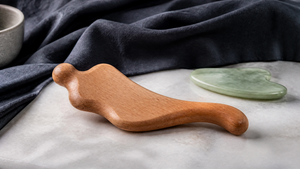

Most gua sha tools arrive in a little velvet pouch, polished to a gleam. The Tidesmit Gua Sha Wood Massager doesn't. It's a contoured beechwood tool that feels less like a skincare accessory and more like a small, well-made instrument—one you'd find on a woodworker's bench, not a vanity.
That difference in material is the whole story here. Most gua sha tools are carved from jade, rose quartz, or other stone. They crack when dropped. They chip along the edges. The Tidesmit sidesteps that fragility entirely by using solid beechwood, a choice that trades a cool, polished surface for something warmer, more forgiving, and far less likely to shatter on the bathroom floor. Whether that trade-off makes sense depends on what you want from a facial massage tool.
Verdict: Is the Tidesmit Gua Sha Wood Massager Worth It?
The Tidesmit Gua Sha Wood Massager is worth considering if you want a durable, multi-purpose tool that won't break when it slips from your hands. Its solid beechwood construction gives it a longevity advantage over jade or rose quartz alternatives, and its contoured shape is designed to work across the face, nose, eyes, and even the neck and body—a versatility highlighted in the product listing on Newegg.
What you're not getting is a tool that promises permanent facial reshaping. The source-reported benefits are more modest: temporary relief from puffiness, improved skin relaxation, and a short-term boost in circulation, according to Gulf News. For many users, that's enough. A few minutes of massage in the morning can make the face look less puffy and feel more awake. The Tidesmit handles that job capably, and it won't crack if you're clumsy with it.
Who Should Choose the Tidesmit Wood Gua Sha?
This tool is built for someone who has dropped a jade roller before and winced at the cost of replacing it. If you want a gua sha tool that can travel without a padded case, or one that can handle being used on the body as well as the face, the Tidesmit's beechwood build makes a strong practical case. The product listing also notes its suitability as a gift—an angle that makes sense given the tool's handcrafted appearance and the fact that it arrives ready to use, no special storage required.
You might reach for it when your eyes feel tired from screen use, your neck is stiff from a long day, or your jaw muscles are tight. The Tidesmit is marketed for these pain points, though it's worth being clear: massage can temporarily ease tension, but it doesn't treat underlying conditions. Pairing the tool with a few drops of Palmer's Skin Therapy Face Oil helps it glide without pulling the skin—a common frustration when using wooden tools without enough slip.
Design and Material: Why Beechwood Matters
A jade gua sha tool hits the tile floor and you're left with two pieces. Beechwood doesn't have that problem—it's solid, resilient, and far less likely to chip or crack under everyday mishandling. The Tidesmit leans into this material choice, and the result is a tool that feels substantial in the hand without the cold, slippery quality of polished stone.
The contoured shape is where the design gets more specific. The Tidesmit is carved to fit the curves of the face, with a profile that can reach the sides of the nose, under the eyes, and along the jawline. It's also marketed as a head and body massager, not just a facial tool. That multi-functionality means you're not buying a single-purpose item—you can use it on your neck, shoulders, or anywhere muscle tension builds up. The Newegg product page lists face, nose, eye, and head applications, framing it as a broad-use tool rather than a precision facial sculptor.
One detail worth noting: professional-grade gua sha tools often feature a precision-beveled edge between 0.8 and 1.2mm, according to Freyara. The Tidesmit's exact edge thickness isn't specified, so we can't say whether it falls within that range. What we can say is that the tool's wooden construction and contoured design prioritize comfort and durability over surgical precision—a trade-off that may suit casual users better than those chasing a professional-grade edge.
How the Tidesmit Compares to Other Gua Sha Tools
Material changes everything. Stone, metal, and wood each bring a different feel, a different durability profile, and a different kind of massage. The Tidesmit's beechwood sits in a distinct corner of this landscape—warm, resilient, and without the cooling effect that some users specifically seek out. Here's how it stacks up against three common alternatives.
Stainless Steel Gua Sha: Durability and Hygiene
A chip-resistant alternative with a cooling effect. The Rena Chris Stainless Steel Gua Sha and similar metal tools are less likely to chip than jade or rose quartz, and they bring a noticeable chill to the skin—something that can help with temporary depuffing. The metal conducts temperature quickly, so a few seconds under cold water gives you a cooling sensation that lasts through the massage.
The Tidesmit's wood, by contrast, doesn't conduct temperature at all. It stays neutral. For some, that's a drawback—no cooling, no morning wake-up jolt. For others, especially those with sensitive skin or a preference for warmer tools, it's a feature. The massage intensity is a separate consideration: metal tools can feel more precise along the jawline, but wood offers a softer, more diffuse pressure that some find more comfortable for daily use.
Sandalwood Head Massager: Another Wood Option
A multi-purpose wood tool for face and head massage. The Head Massager Sandalwood Wood Massage Tool, also listed on Newegg, shares the Tidesmit's wooden construction but adds a sensory element: sandalwood's distinct scent. That fragrance can make the massage feel more ritualistic, and it's part of the tool's appeal as a gift item.
Both tools are marketed for face, nose, eye, and head use, and both avoid the cracking risk of stone. The Tidesmit uses beechwood, which is harder and denser than sandalwood, giving it a slightly different heft in the hand. Sandalwood's scent fades over time, and some users may prefer that aromatic quality, while others might find it unnecessary or even distracting. The Tidesmit is scent-free, which keeps the experience simpler.
Jade Roller: A Gentler Approach
A less intense massage tool, often used with serums. Jade rollers have been the entry point for most people into facial massage, and they're genuinely gentle—a rolling stone that glides over the skin with light pressure. The trade-off is intensity. Gua sha tools, including the Tidesmit, offer a more deliberate, targeted massage that can reach deeper into muscle tension, as noted by Gulf News.
Jade also has a well-known weakness: it cracks. Drop a jade roller on a hard surface and it's likely done. The Tidesmit's beechwood sidesteps this entirely. If you're looking for a tool that can handle a bit of rough treatment—tossed into a bag, used on the body, handled by someone who isn't precious about their skincare tools—the wood construction is a clear advantage. But if you prefer a feather-light touch and don't mind the fragility, a jade roller may still be the right fit.
Potential Drawbacks to Consider
The Tidesmit doesn't get cold. If you've ever used an ice roller or a metal gua sha tool first thing in the morning, you know that the chill can be part of the appeal—it shocks the skin awake, temporarily constricts blood vessels, and helps reduce puffiness. Wood simply can't replicate that effect. It's a neutral material, and for users who want the sensory jolt of cold therapy, this tool will feel like it's missing something.
Wood also requires a bit of attention after use. It's not high-maintenance, but you'll want to wipe it down with a damp cloth and let it dry completely before storing it. Leaving it wet could affect the finish over time. The contoured shape, while versatile, may not fit every facial contour perfectly—what glides smoothly along one person's jawline might feel awkward on another's. None of these are dealbreakers. They're just realities of choosing a wooden tool over a stone or metal one.
How to Use the Tidesmit Gua Sha for Best Results
Start with a few drops of face oil. Wood doesn't glide on dry skin—it tugs. Palmer's Skin Therapy Face Oil works well here, giving the Tidesmit enough slip to move smoothly without pulling. Apply the oil, then use gentle upward strokes along the jawline, cheeks, and forehead. The tool's contoured edge can reach the sides of the nose and under the eyes, but keep the pressure light—you're encouraging fluid movement, not scraping the skin.
The Tidesmit is also designed for body use. You can run it along the neck, over the shoulders, or across tight forearm muscles. The product listing frames it as a head massager too, so don't be afraid to experiment with different angles and pressure levels on the scalp. After each use, wipe the tool with a damp cloth and store it somewhere dry. Wood doesn't need much upkeep, but it doesn't like sitting in moisture.
One figure from the research is worth keeping in mind: proper gua sha technique has been associated with up to a 400% increase in microcirculation for about seven minutes post-treatment, according to a study cited by Freyara. That's a short-term effect, not a lasting transformation. But it helps explain why regular use can lead to the temporary contour improvements noted by Gulf News—a few minutes of massage, done consistently, can make the face look and feel less puffy. How often you use it is up to you, but daily use is common, and the tool's durability means it can handle the repetition.
