
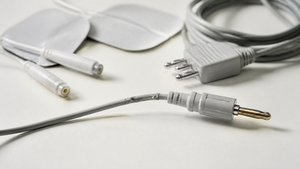

One moment the Tidesmit EMS unit is delivering a steady, deep contraction; the next, the current drops out and the muscle relaxes unexpectedly. The session stops until you can figure out what went wrong. Often, a failed lead wire is to blame. These cords are not permanent parts of the machine. They are consumable accessories that bend, twist, and get plugged in and out with every use, and over time, the thin conductors inside wear down.
Knowing that a lead wire is a replaceable item can save you from mistakenly thinking the whole device is broken. The Tidesmit EMS Muscle Sculpting Machine relies on that cord to carry the electrical signal from the control unit to the electrodes. Once you recognize the signs of a worn-out wire, getting back to your routine is usually a quick fix.
When Your Tidesmit EMS Lead Wire Stops Working
A failing lead wire rarely quits all at once. More often, it gives you warning signs: the intensity cuts out when you shift position, or the device powers on but you feel no sensation at the electrodes. The connection may seem fine until you move the cord a certain way, and then the current disappears. These are not necessarily signs of a defective machine; they are typical of a lead wire that has reached the end of its useful life.
Lead wires are subjected to constant flexing, pulling at the connectors, and repeated plugging. The Tidesmit EMS unit is no exception. Like any electrotherapy accessory cord, it will eventually need a fresh replacement. Recognizing that the wire is a wearing part—and not a permanent fixture—can prevent a lot of head-scratching and downtime.
Why Lead Wires Fail
The point where a lead wire plugs into the device is its most vulnerable spot. Every time you insert or remove the connector, metal pins slide against the socket, and the wire bends sharply right at the molded plug. Over time, the tiny stranded conductors inside can snap from repeated flexing, even if the outer insulation still looks intact. A wire that gets kinked or yanked—especially when someone pulls on the cord instead of the connector—is on a fast track to failure.
Common physical causes include:
- Sharp bending at the device connector or electrode plug
- Kinking from being wrapped too tightly for storage
- Strain from pulling the cord rather than the plug when disconnecting
- Internal breakage from thousands of flex cycles during normal use
The Tidesmit EMS lead wire is subject to the same general failure modes as any other electrotherapy lead wire. Once the internal conductors break, the electrical signal becomes intermittent or stops entirely. The insulation may hide the damage, so a visual inspection doesn't always tell the whole story.
What to Look for in a Replacement Lead Wire
The connector is the make-or-break detail. The plug that goes into the Tidesmit unit must match the port exactly—pin size, shape, and number of contacts. Many TENS and EMS devices use a 2mm pin connector, but there are variations, and assuming a standard pin will fit can lead to a loose or non-functional connection. As a reference, a typical lead wire like the Standard 45" TENS Lead Wire from Richmar features a 45-inch cord and a 2mm pin, but the Tidesmit machine may have a different requirement. Before buying, check the device manual or the manufacturer’s specifications for your exact model.
Length matters too. A 45-inch cord is common and gives enough slack for most uses, but longer options—some reach 96 inches—can be helpful if you need to place the control unit on a table or cart while you move during treatment. Beyond length, look for reinforced connectors. A thicker, more flexible jacket where the cord meets the plug can guard against the bending that leads to early failure. Durable insulation and strain relief are worth paying attention to, because that’s where most wires break first.
How to Replace Your Tidesmit EMS Lead Wire
Start by turning the Tidesmit EMS machine off and unplugging it from any power source. Never tug on the cord itself; grip the connector firmly at the point where it enters the device and pull it straight out. Remove the other end from the electrodes in the same careful way. Before you plug anything in, inspect the new lead wire for kinks, cuts, or bent pins. A damaged wire can cause erratic performance or even fail to work at all.
Insert the new cord into the unit’s output port until it clicks or seats securely. Attach the electrode ends next. Then set the intensity to a low level and briefly activate the unit. You should feel a steady, even current without any dropouts. If the connection is solid, you can gradually increase the intensity and resume your session. A quick test like this is a small step that can catch a poor connection before you’re mid-routine.
Where to Find Replacement Lead Wires
When it’s time to order a replacement, the most straightforward choice is the manufacturer’s own lead wire. While third-party electrotherapy accessories are available, using the original part removes the uncertainty about connector fit and signal quality. The official cord is designed to work with the specific output of the Tidesmit unit, so you can skip the trial-and-error of universal TENS wires.
Tidesmit EMS Muscle Sculpting Machine 7 Tesla TENS Unit Lead Wire
The direct replacement from the manufacturer is the Tidesmit EMS Muscle Sculpting Machine 7 Tesla TENS Unit Lead Wire. This cord is built to match the device’s port precisely, reducing the chance of an intermittent connection or a weak signal. It is available as a separate part, so you don’t have to sort through generic TENS wires that may or may not fit. Replacing the lead wire with the manufacturer’s version keeps the setup simple and helps avoid compatibility headaches.
Frequently Asked Questions
Can I use any TENS lead wire with my Tidesmit machine?
Not necessarily. The connector must match the Tidesmit’s port exactly—pin size, shape, and number of contacts. A standard TENS wire may look similar but fail to make a reliable connection. Check the device manual or use the manufacturer’s replacement lead wire to avoid guessing.
How often should I replace lead wires?
Replace a lead wire when you notice intermittent power, visible damage, or a loss of effectiveness. There is no set replacement schedule. Some users may need a new cord after a few months of frequent use, while others get years of service. The key is to swap it at the first sign of trouble.
Why does my Tidesmit machine keep turning off during use?
A broken or loose lead wire is a common cause. The device may shut down if it detects a poor connection. Inspect the wire for kinks or fraying, and make sure it is plugged in securely. If the problem persists after replacing the wire, the machine itself may need attention.
