
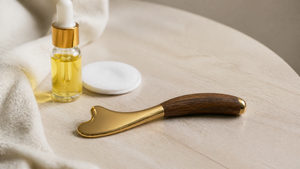

Waking up with puffy eyes can feel like a morning ritual you never asked for. A cool compress helps, but the puffiness often returns before lunch. That’s where a gua sha eye tool enters the conversation — a small, curved instrument that promises to move fluid, ease tension, and brighten the eye area. The Tidesmit Brass Gua Sha Eye Massage Tool is one such tool, designed specifically for the delicate eye region.
Before you add it to your routine, it’s worth untangling the marketing claims from what the tool can realistically do. This article draws on source-reported experiences and known facial massage principles, not personal testing, to separate myth from reality.
What Gua Sha Eye Massage Promises (and What It Doesn’t)
Gua sha for the face often arrives with a list of promises: draining puffiness, softening fine lines, lifting the brows, and melting away stress. The cheekyphysique.com rundown of benefits points to lymphatic drainage, improved circulation, and release of facial muscle tension as potential outcomes. These are real effects of gentle, targeted massage — not cosmetic miracles. The tool itself doesn’t inject anything or alter skin structure; it’s a facilitator, and the results depend on the technique and consistency.
What’s missing from the promises is a timeline. The benefits are temporary. A few minutes of massage can shift fluid, relax the muscles around the eyes, and leave the skin looking a little smoother, but the effect fades. The sources don’t suggest that a gua sha tool can replace medical treatments, nor do they claim permanent changes to under-eye bags or wrinkles. Think of it as a daily reset button, not a one-time fix.
The Myth: Gua Sha Can Eliminate Under-Eye Bags Permanently
The most stubborn myth is that gua sha can permanently erase under-eye bags. That misunderstanding conflates fluid retention with fat deposits — two different things. Fluid retention is temporary; it’s the extra water that collects under the eyes after a salty meal, a bad night’s sleep, or allergies. Gua sha massage, by encouraging lymphatic flow, can help move that fluid along, reducing puffiness for a few hours. The foreveryounglab.com writer noticed exactly this: a visible reduction in puffiness that lasted a few hours, then returned.
But under-eye bags can also be structural — a small pad of fat that herniates with age, genetics, or weakening facial muscles. No amount of surface massage can remove that fat. The foreveryounglab experience didn’t claim to shrink fat pads, and no source here suggests that gua sha can reshape the undereye area permanently. The tool simply doesn’t work on fat. When someone says “gua sha got rid of my bags,” they’re likely describing a temporary de-puffing of fluid, not a structural change.
The Reality: What Gua Sha Can Actually Do for the Eye Area
What you can reasonably expect is a short-term improvement. The cheekyphysique.com source highlights lymphatic drainage and tension relief as key benefits of facial gua sha. For the eye area, that means gentle strokes can encourage the movement of excess fluid, reducing the look of puffiness and softening the appearance of the under-eye bags that are fluid-driven. The foreveryounglab writer experienced a soothing effect, too — a sense of release around the orbital bone. This isn’t just about aesthetics; releasing tension around the eyes can feel like a small, calming ritual.
Consistency is the unglamorous piece. The foreveryounglab trial used the tool once a day, and the results lasted only as long as the habit. There’s no lasting structural change. The tool is essentially a training aid for your circulatory and lymphatic systems — a daily nudge to keep fluid moving. Over time, that daily habit may help prevent the kind of fluid buildup that leads to a consistently puffy look, but stop the habit, and the puffiness returns.
The Tidesmit Brass Tool in Practice
The Tidesmit Brass Gua Sha Eye Massage Tool is built for this specific job. Its brass construction gives it a pleasant weight and coolness, and the lotus seedpod shape is designed to glide over the eye contour without dragging. Many users find that applying an eye cream first — as the foreveryounglab source did — provides the necessary slip and prevents friction. The tool’s curved edge can follow the orbital bone, and the smaller end can target acupressure points around the temple and brow.
To incorporate it, use a small amount of eye cream — a day cream for morning de-puffing or a night cream for evening relaxation — and stroke gently from the inner corner outward. The foreveryounglab routine involved once-daily use for four weeks, and that’s a realistic trial period. The tool isn’t a standalone treatment; it’s only as effective as the pressure, angle, and consistency you bring to it. As one source noted, the tool works best when it becomes part of a quiet, unhurried moment, not a rushed step in a busy morning.
Temporary vs. Lasting Results: Setting Realistic Expectations
The foreveryounglab writer’s experience is a useful benchmark: the de-puffing effect lasted a few hours, and daily repetition was necessary to maintain it. That’s a far cry from the “permanent” results some product descriptions suggest. A four-week trial, using the tool once a day, can show you what the tool can do consistently, but it won’t lock in the results. If you stop, the fluid will settle back.
This isn’t a failure of the tool; it’s a reflection of the body’s natural fluid dynamics. The lymphatic system doesn’t have a central pump — it relies on muscle movement and external pressure to move fluid. A gua sha tool provides that external pressure temporarily. Think of it like a facial massage: it feels good, it can temporarily lift the look of the face, but it doesn’t restructure anything. That daily habit may help you manage fluid retention, but it won’t alter the underlying anatomy. The tool is a maintenance device, not a corrective one.
How to Use a Gua Sha Tool for the Eye Area Safely
Safety comes down to pressure and preparation. Always use a lubricant — an eye cream or oil — to reduce friction. The foreveryounglab source compared using the tool with eye cream versus without, and the cream made a noticeable difference in glide. Without it, the tool can drag on the delicate under-eye skin, which is thinner than the rest of the face. Light pressure is key; the area around the eyes is bony and sensitive, and aggressive scraping can cause bruising or broken capillaries.
For morning use, a day cream can help with de-puffing, while a night cream adds a soothing element before bed. Avoid using the tool on broken skin, active acne, or if you have a tendency to bruise easily. If irritation occurs, stop. The tool should never be used on the eyelid itself — stay on the orbital bone and the area just below the brow. The foreveryounglab writer noted that the tool felt comfortable and didn’t cause bruising, but that’s not a guarantee for everyone. Listen to your skin.
Frequently Asked Questions About Gua Sha and Eye Massage
Can gua sha reduce dark circles under the eyes?
It may help if the dark circles are caused by fluid retention, not pigmentation. The cheekyphysique source notes that improved lymphatic drainage can temporarily reduce the dark shadow that comes from pooled fluid. But it won’t lighten pigment or permanently erase dark circles; the effect is temporary and depends on the cause.
How long does the de-puffing effect last after gua sha?
The foreveryounglab experience recorded a few hours of visible reduction in puffiness, with the effect gradually fading. Daily use maintained the benefit, but it wasn’t permanent. The tool provides a short-term reset, not a lasting fix; results vary by individual and the underlying cause of the puffiness.
