
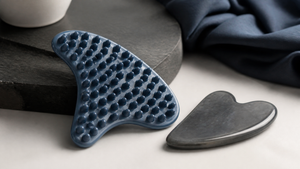

Gua sha tools have long been celebrated for their ability to release facial tension and encourage lymphatic flow, but most follow a familiar template: smooth jade or rose quartz edges that glide over the skin. The Tidesmit 32 Spiky Node Gua Sha Massage Tool breaks that pattern. Instead of polished stone, it offers 32 small pointed nodes across a curved plastic body — a design that feels more like a handheld acupressure mat than a traditional gua sha stone.
That unusual approach invites immediate questions. Is it still gua sha? Can you use it on your face? And does the spiky surface do anything a smooth stone can’t? This article walks through what the tool actually is, how it’s built, and where it fits among more familiar gua sha options — so you can decide if the texture change is worth the switch.
What Is the Tidesmit 32 Spiky Node Gua Sha Tool?
The Tidesmit 32 Spiky Node Gua Sha Massage Tool is a manual, unpowered massage tool shaped roughly like a rounded paddle. Its defining feature is the 32 raised nodes covering one side, designed to press into muscles with more granular intensity than a flat-edged stone. While the product handle references foot massage and plantar fascia relief, the tool is marketed for both facial and body use — including larger areas like the shoulders and calves.
Gua sha itself is a scraping massage technique, traditionally performed with smooth-edged stones. According to jaqulineusa.com, the practice is reported to support lymphatic drainage, reduce facial puffiness, and ease muscle tension. The Tidesmit tool applies those same directional strokes — you sweep it outward across the skin with a facial oil — but the sensation shifts from a broad glide to a more deliberate, nubby pressure. Some users find that the nodes deliver a kind of targeted release that feels closer to trigger-point work, especially along the jawline or the arch of the foot.
Design, Materials, and Key Features
The Tidesmit tool is made entirely of plastic — a deliberate choice that differs from the stone, metal, or resin blends found in many gua sha sets. Because plastic is non-porous, it doesn’t trap oils or bacteria the way natural stone can, which makes it easier to sanitize with plain soap and water. For anyone managing acne-prone skin, this is a practical advantage. There’s no need to baby the tool after each session; a quick wash restores a clean surface.
The 32 nodes are relatively short and conical, arranged in a honeycomb-like pattern. Unlike the continuous edge of a traditional gua sha stone, these points create concentrated pressure zones that can feel assertive, even when you use light strokes. The tool stays at room temperature — no refrigeration required — which means it won’t deliver the cool shock that a chilled jade roller provides, but it also removes the need to plan ahead for puffiness relief. A molded handle on the back keeps your grip steady when the tool gets slick with oil, and the whole piece is compact enough to toss into a gym bag or carry-on.
Plastic does feel different from real stone. It lacks the weight and cool touch of jade or quartz, and the difference in texture is immediately noticeable. The trade-off, though, is durability: drop a stone tool on tile and it may chip or crack, while the Tidesmit absorbs minor impacts without issue. If your routine involves hurried mornings or hard bathroom floors, that resilience might matter more than aesthetics.
How It Compares to Other Gua Sha Tools
The gua sha landscape is now crowded with options — smooth jade, textured resin, stainless steel, sets with rollers — and the Tidesmit tool lands far from the center of that bell curve. A buying guide at requiemforadream.com reviews dozens of tool sets, and across them, two choices dominate: traditional stone shapes and the occasional metal upgrade. The Tidesmit’s plastic, spiky design is an outlier, offering a different combination of hygiene, intensity, and target area. Here’s how it stacks up against three popular alternatives.
Rena Chris 4-Piece Gua Sha Tool Set
The Rena Chris set includes multiple natural stone tools — typically a heart-shaped gua sha board, a mushroom-shaped facial stone, and other contour pieces — and carries an 82% five-star rating from nearly 4,000 reviews. These stones provide the smooth, cool glide that most people picture when they hear “gua sha.” Compared to the Tidesmit tool, the sensation is broader and less prickly, making it feel gentler on the skin.
Material is a key difference. Natural stone can be porous and may require more attentive cleaning, especially for acne-prone users, and there’s always the risk of chipping if a stone slips. The Tidesmit’s plastic construction sidesteps both issues. On the other hand, the Rena Chris tools are designed exclusively for facial work, so you won’t be using them on sore feet. The Tidesmit’s multi-purpose use gives it a functional edge for anyone wanting a single tool for face and body, even if the massage feel is decidedly less traditional.
BAIMEI IcyMe Jade Roller & Gua Sha Set
With over 38,000 reviewers, the BAIMEI IcyMe set is a budget-friendly option that pairs a jade roller with a curved gua sha stone. The roller’s claim to fame is the cooling effect: pop it in the fridge for about 15 minutes and it becomes cold enough to help constrict blood vessels and temporarily de-puff, particularly around the eyes.
The Tidesmit tool operates at room temperature and relies on manual pressure, not cold, to influence circulation. The spiky nodes also deliver a more intense localized massage than the roller’s smooth, gentle barrel — great for deep tissue work along the jaw or temples, but potentially overstimulating for someone with sensitive skin or a preference for light touch. A note on hygiene: the BAIMEI stone is natural jade, which demands more thorough drying and occasional oil cleansing, whereas the Tidesmit’s non-porous plastic can be washed quickly and air-dried. And if you prize simplicity, the Tidesmit requires no pre-planning for cooler temps; it’s always ready as-is.
Yeamon Stainless Steel Roller & Gua Sha Set
The Yeamon set moves the conversation into premium territory with stainless steel tools — a material that, according to requiemforadream.com, offers instant cooling without refrigeration and superior hygiene compared to natural stone. The moment you pick up a stainless steel gua sha tool, it feels noticeably cold, and that temperature drop can be maintained for minutes without a freezer run. Both the Yeamon and Tidesmit tools share the same basic hygienic advantage: non-porous surfaces that resist bacteria.
Where they part ways is texture. The Yeamon gua sha stone is smooth-edged like the Rena Chris or BAIMEI versions, meaning it provides the familiar scraping motion that many users associate with lymphatic drainage. The Tidesmit, with its 32 nodes, trades that smoothness for targeted pressure points that can dig into stubborn knots on the neck, feet, or along the brow bone. The Yeamon set tends to sit at a higher price point, and while specific dollar amounts aren’t listed here, the stainless steel construction generally pushes it into a premium tier. The Tidesmit, made of plastic, may feel less luxurious but costs less to produce — and it doesn’t demand the same budget commitment.
Who Should Consider the Tidesmit 32 Spiky Node Tool?
If your skin breaks out easily and you’re tired of worrying whether your gua sha stone is truly clean, the non-porous plastic design removes a lot of that anxiety. The tool’s material and simple shape also appeal to anyone who wants a single implement for both facial massage and targeted foot relief — it can press into the plantar fascia after a long run just as readily as it can work along the cheekbones.
The spiky nodes create a massage experience that feels deeper and more focused than a smooth stone. That may be a good fit if you regularly deal with knots in the jaw, tension headaches, or tight muscles that resist broad strokes. On the flip side, some people simply prefer the cool, weighty feel of genuine stone or the polished glide of metal. The Tidesmit tool offers neither a cold temperature nor a luxurious hand feel, so if those sensory details matter to you, the switch will feel like a downgrade. There’s also a learning curve: gua sha still benefits from some understanding of facial anatomy and lymphatic pathways, though the tool’s contours make it fairly forgiving to hold and maneuver.
Final Verdict: Should You Buy It?
The Tidesmit 32 Spiky Node Gua Sha Massage Tool carves out a specific niche. Its strengths are clear: a hygienic, easy-to-clean surface; a multi-purpose design that spans face and body; and a unique node pattern that can mimic the pressure of acupressure or deep tissue work. It doesn’t require refrigeration, won’t break when dropped, and sidesteps the cleaning rituals that come with porous stone.
The trade-offs are equally real. No cooling effect, a plastic texture that lacks the sensory weight of stone or metal, and a relative scarcity of reviews compared to bestsellers like the BAIMEI or Rena Chris sets. For someone who wants a durable, low-maintenance tool and is curious about a more intense, targeted massage — particularly for feet and jaw tension — the Tidesmit makes practical sense. But if you’re chasing the classic cool glide of smooth jade or the instant chill of stainless steel, you’ll likely be happier with a more traditional option.
Frequently Asked Questions
Is gua sha better than a jade roller?
Gua sha uses a scraping motion that, according to santeclinics.com, may offer more intense lymphatic drainage and the ability to target specific facial areas, while jade rolling provides a gentler, rolling massage that’s often used to reduce puffiness. The Tidesmit tool’s spiky nodes adapt the gua sha approach with a more textured surface.
How do I clean the Tidesmit 32 Spiky Node Tool?
Wash it with mild soap and warm water after each use, then dry it with a clean towel. Because the plastic is non-porous, no special sanitizing routine is needed — a quick wash keeps the surface free of oil and bacteria.
Can the Tidesmit tool help with TMJ pain or facial tension?
Gua sha massage in general is reported to help release tension in the facial muscles, including around the jaw, though individual results vary. The Tidesmit’s nodes can apply more focused pressure along the masseter muscle, which some users find beneficial, but there are no studies specifically on this tool.
