

Introduction
Wireless charging has become a staple for today’s smartphone owners because it removes the hassle of plugging cables, reduces wear on charging ports, and supports a tidy desk or night‑stand setup. As phones become more powerful and users demand convenience, the ability to simply place a device on a pad and let it charge while browsing, video‑calling or sleeping is a major productivity boost. The technology has also matured: the original Qi standard, introduced over a decade ago, delivered up to 15 W and required precise alignment. In 2025 the Wireless Power Consortium launched Qi2, adding magnetic alignment that snaps phones into the optimal charging spot, similar to Apple’s MagSafe. Qi2 is backward compatible, but devices that support its 25 W fast‑charging mode—such as the iPhone 17 series, Google Pixel 10 Pro XL and Samsung Galaxy S26—can now refill batteries up to 10 % faster than legacy pads.
Tidesmit, an Ireland‑based e‑commerce platform, complements its unlocked‑smartphone catalogue with a curated range of Qi2‑certified chargers from brands like Anker, Belkin, and UGREEN. The company ships worldwide for free to over 200 countries, offers clear duty estimates, and provides 24/7 support, ensuring that customers receive authentic, safety‑tested accessories alongside their new unlocked devices.
Understanding Qi and Qi2: The Foundations of Wireless Power
The original Qi standard, introduced by the Wireless Power Consortium, set a universal baseline for inductive charging and caps fast wireless power at 15 W. This limit is sufficient for most smartphones, delivering a respectable 0‑50 % charge in about 30 minutes, but it falls short of the 25 W ceiling now offered by the newer Qi2 specification. Qi2, launched in 2025, adds a ring of magnets to the charging coil, aligning the phone precisely and reducing energy loss. This magnetic alignment, similar to Apple’s MagSafe, enables up to 25 W wireless power transfer for compatible devices such as the iPhone 17 series and Google Pixel 10 Pro XL, shaving several minutes off a typical charge cycle. Crucially, Qi2 is backward‑compatible: a Qi2‑certified pad will still charge older Qi‑only phones, though those devices can only draw their original 7.5 W‑15 W maximum. The same applies in reverse—Qi‑only chargers work with Qi2‑ready phones, but they cannot exploit the higher 25 W rate. This interoperability ensures a smooth transition for users upgrading to newer smartphones while preserving the convenience of a single, universal charging pad.
Magnetic Alignment: From Apple MagSafe to Universal Qi2
Apple’s MagSafe system adds a ring of built‑in magnets around the iPhone’s charging coil. When a MagSafe‑compatible pad is placed, the magnets snap the phone into the exact spot where the transmitter coil lines up with the receiver coil, eliminating mis‑alignment and allowing the device to draw its maximum wireless power—up to 15 W on newer iPhones and 25 W when paired with a high‑wattage adapter. The newer Qi2 specification extends this magnetic‑alignment concept to all brands. Qi2‑certified chargers embed a matching magnet array that works with iPhone 12‑series devices as well as Android phones that support the Qi2 standard, such as the Samsung Galaxy S26 series and Google Pixel 10 Pro XL. Because the phone is held in the optimal position, Qi2 chargers can deliver the full 15 W (or 25 W for Qi2 25 W‑enabled models) with less energy lost as heat. The result is a faster, more efficient charge, lower surface temperature, and a reliable coil‑to‑coil connection that works through most standard‑thickness cases, making wireless charging both convenient and battery‑friendly.
Budget‑Friendly Qi Chargers That Deliver Value
For users who want reliable wireless charging without breaking the bank, three low‑cost Qi options stand out in 2026. The Anker PowerWave Pad and Stand are ultra‑affordable, priced around $12‑$25, and provide up to 10 W for Samsung phones, 7.5 W for iPhones, and 5 W for other Qi devices. Their compact design includes a USB‑C cable and works well with standard 20‑W adapters, delivering fast‑enough power for everyday use while fitting comfortably on a desk or nightstand. Spigen OneTap Pro 3 Cryomax pushes performance a step higher at a budget price, offering 15 W charging and a built‑in cooling fan that keeps phones cool during longer sessions—ideal for newer iPhone 17 series or Google Pixel 10 Pro XL](https://www.wired.com/gallery/best-wireless-chargers/). Finally, the Yootech 10 W Max Fast Pad delivers solid value with a $9.99 price tag, supporting up to 10 W for Android devices and 7.5 W for iPhones. Its generous case‑thickness tolerance (up to 4.4 mm) means most everyday cases won’t impede charging, making Yootech a practical choice for travelers and budget‑conscious consumers alike.
Premium Multi‑Device Stations for the Complete Ecosystem
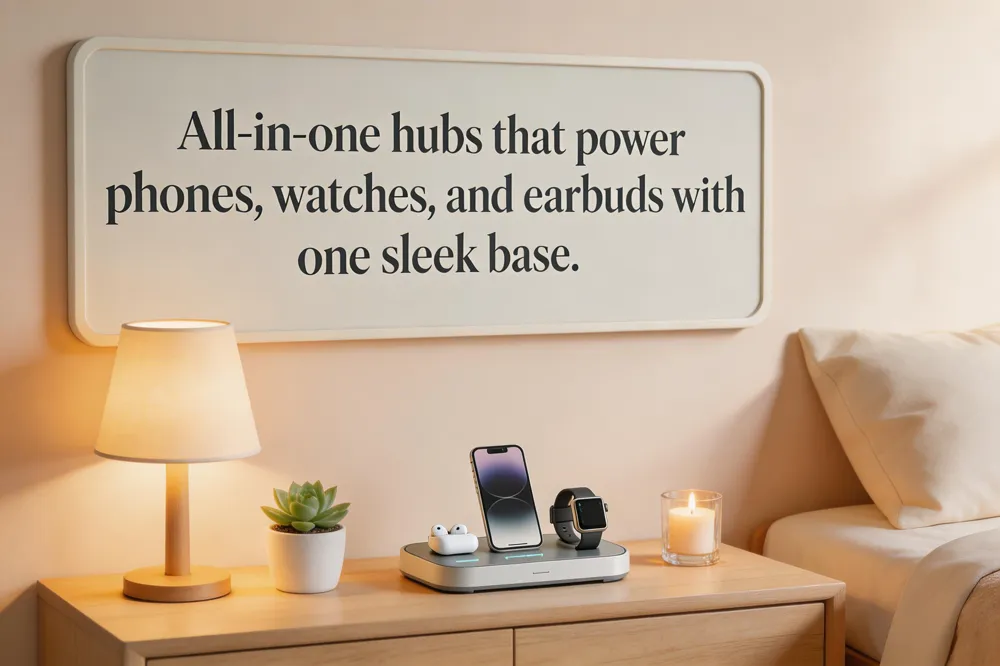
For users who want a single, tidy hub that powers all of their daily gadgets, three multi‑device chargers stand out in 2026. The Anker MagGo 3‑in‑1 Wireless Charging Station delivers 15 W Qi2‑certified power to a phone, a dedicated pad for AirPods and a magnetic dock for an Apple Watch, all in a compact fold‑away design; it ships with a 40 W USB‑C adapter and a 5‑foot cable, making it travel‑ready and perfect for the iPhone 17, Galaxy S26 or Pixel 10 Pro ecosystem. The Belkin UltraCharge 2‑in‑1 Foldable Magnetic Wireless Charger pushes wireless limits with a 25 W main coil for fast phone charging and a secondary 5 W earbud pad, paired with a 45 W power adapter and a braided USB‑C cable for reliable performance across iOS, Android and earbuds. Finally, the Baseus Nomos 5‑in‑1 Charging Station combines a 15 W Qi2 phone pad, a 100 W USB‑C hub, and additional ports for laptops, tablets and peripherals, offering a true desk‑side power center for power unlocked flagship phones sold by Tidesmit. Together, these stations cover the full ecosystem—phone, watch, earbuds and accessories—while keeping cables to a minimum.
Travel‑Ready Foldable Chargers for On‑the‑Go Power

For frequent travelers who want a compact, all‑in‑one charging solution, three foldable options stand out. The Anker MagGo 3‑in‑1 Foldable Station packs a 15 W Qi2‑certified phone charger, a wireless pad for AirPods and a dedicated Apple Watch spot into a slim, travel‑ready case. It ships with a 40 W USB‑C power adapter, ensuring the charger can reach its full output even when paired with a high‑capacity wall brick. On Amazon, a magnetic 3‑in‑1 foldable charger offers a more modest 3 W output for phones and 5 W for AirPods, but its ultra‑light design and magnetic alignment make it ideal for backpack‑friendly use. The UGREEN MagFlow 2‑in‑1 Foldable Stand combines a 25 W Qi2 pad for fast phone charging with a magnetic AirPods dock, all in a lightweight aluminium frame that folds flat for easy packing. Each of these chargers is Qi‑certified, includes safety features such as over‑temperature protection, and can be ordered through Tidesmit’s free worldwide delivery service, arriving in 5‑10 business days to most destinations.
Car‑Mount Wireless Chargers: Power While Driving
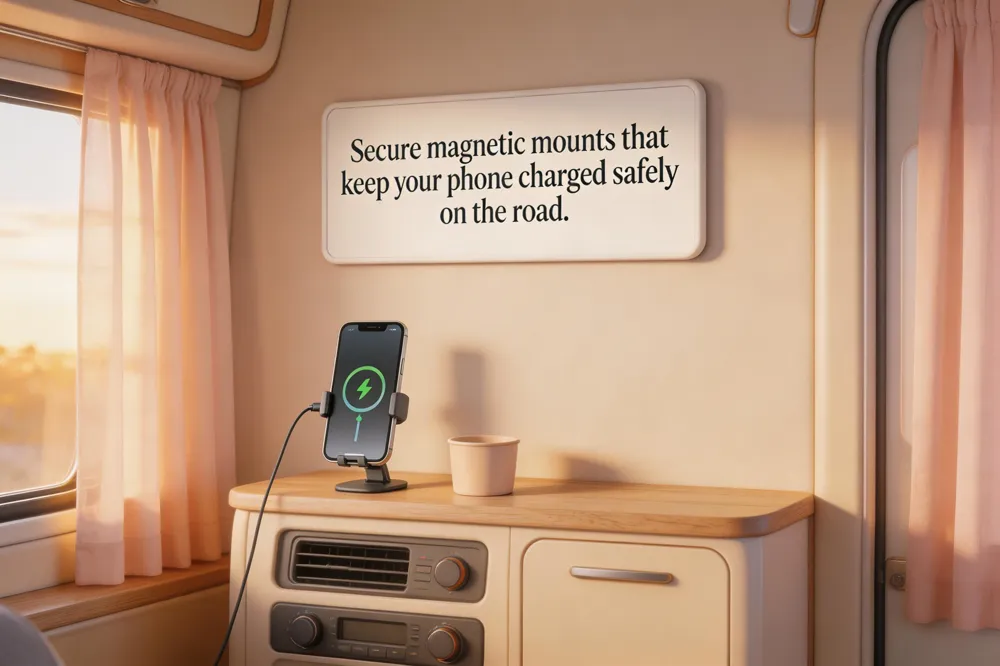
Modern drivers can keep their smartphones fully powered without fumbling for cables, thanks to magnetic car‑mount chargers that combine secure mounting with fast Qi2 wireless power. The Pitaka MagEZ Car Mount Pro 2 Qi2 delivers up to 15 W of charging while automatically aligning the phone via magnetic rings; an NFC chip lets users set shortcuts for navigation, music, or voice assistants with a single tap, turning the mount into a smart dashboard hub. For users who need the absolute fastest wireless rate, the Anker Prime 25 W Wireless Car Charger offers a full 25 W output for iPhone 16/17 (and other Qi2‑ready devices) when paired with a 30 W USB‑C adapter, while still providing 15 W for older iPhones and Android phones. The ESR HaloLock Kickstand takes a different approach, featuring a sturdy magnetic clasp that holds the phone in place and an adjustable kickstand that lets you tilt the screen for optimal viewing while the charger supplies a consistent 15 W MagSafe power. All three models are compatible with the latest unlocked smartphones stocked by Tidesmit—such as the iPhone 17 series, Samsung Galaxy S26, and Google Pixel 10 Pro—benefit from free worldwide shipping, and include safety features like over‑temperature and foreign‑object detection to protect battery health during long drives.
Eco‑Friendly Options: Sustainable Materials Meet Performance
For environmentally conscious users who don’t want to sacrifice charging speed, three recent chargers blend recycled materials with solid performance. The Nimble Apollo Wireless Pad is built from at least 50 % recycled silicone and post‑consumer plastics, yet still delivers up to 15 W of Qi charging for most smartphones. UGREEN’s MagFlow line takes the eco‑friendly approach a step further, offering a Qi2‑certified 25 W pad that incorporates eight‑layer safety protection and uses recycled plastic components, making it both fast and responsibly sourced. Finally, the Torras PolarCircle combines a 15 W magnetic charging pad with an active cooling fan and boasts 60 % recycled content in its housing, helping to keep devices cool during long charging sessions while reducing waste. All three chargers meet relevant safety certifications, ensuring that the greener materials do not compromise reliability or battery health.
Safety Mechanisms Built Into Modern Chargers
All reputable Qi‑ and Qi2‑certified chargers incorporate multiple safeguards that keep a phone’s battery healthy even when left on the pad overnight. Over‑charging and over‑voltage protection automatically cut power once the device reaches its target voltage, while temperature monitoring sensors detect excess heat and throttle or stop the charge to prevent thermal stress. Many models also include foreign‑object detection, which senses metal or other conductive items between the phone and coil and shuts down the transmitter to avoid arcing. Compliance is verified through the Wireless Power Consortium’s WPC certification and additional regional standards such as CE, FCC and RoHS, ensuring electromagnetic safety, low‑emission operation and the use of environmentally‑friendly materials. Manufacturers further mitigate overnight heating by using magnetic alignment (Qi2/MagSafe) that places the phone in the optimal spot for efficient energy transfer, and by integrating active cooling elements—tiny fans or heat‑dissipating graphite—in higher‑output pads. These combined safeguards mean that a phone can safely remain on a modern wireless charger for hours without risking battery degradation or fire hazards.
Power Adapter Matters: Unlocking Full Wireless Speed
Wireless chargers can only deliver their advertised 15 W‑25 W Qi2 output when they receive enough power from the wall. Most Qi2‑certified pads, such as the Belkin UltraCharge 2‑in‑1 Foldable Magnetic Charger (25 W) or the Anker MagGo 3‑in‑1 Station (15 W), expect a USB‑C Power Delivery (PD) adapter rated at least 20 W, and many recommend 30 W or higher to avoid throttling. A low‑wattage adapter limits the charger’s internal circuitry, resulting in slower charge rates and higher heat, which can reduce efficiency and battery lifespan. Tidesmit’s flagship smartphone bundles—iPhone 17, Samsung Galaxy S26, Google Pixel 10 Pro—are paired with a 20 W or 45 W USB‑C PD wall adapter in the product listings, ensuring the Qi2 pads reach their full 25 W potential. By matching the adapter’s wattage to the charger’s maximum output, users unlock the fastest, most reliable wireless experience while preserving battery health.
Case Compatibility: Thickness Limits and Magnetic Cases
Qi2‑ready smartphones—such as the iPhone 17 series, Google Pixel 10 Pro XL and Samsung Galaxy S26—gain the full benefit of the new 25 W magnetic alignment only when a magnetic case or ring‑adapter is present. The built‑in ring of magnets on these devices (or on a compatible case) snaps the phone into the optimal spot on the coil, reducing mis‑alignment losses and keeping heat down.
For most 15 W Qi2 pads, the charging coil can still couple efficiently through a case up to about 4 mm thick; beyond that the magnetic field is attenuated and charging speed drops noticeably. Many premium pads—Anker PowerWave, Spigen OneTap Pro 3 Cryomax, Nomad MagSafe Stand—list a 3‑4 mm case‑thickness limit for full‑speed operation.
Smartish offers two MagSafe‑compatible options that stay well within these limits: the Gripmunk (a slim, low‑profile case) and the Gripzilla (a protective, bulkier design). Both incorporate the required magnetic ring and are tested to work reliably with Qi2 chargers, making them ideal companions for anyone who wants fast, reliable wireless charging without removing the case.
Charging Speed Comparison: Wireless vs. Wired
Wireless fast charging is generally defined as any pad that can deliver 10 W or more, and the newest Qi2 standard pushes that ceiling to 25 W for compatible phones such as the iPhone 17 series and Google Pixel 10 Pro XL. In practice, a Qi‑ charger25 W pad can charge a phone from 0 % to about 50 % in roughly 30 minutes, but the rate slows as the battery approaches full capacity to protect health. By contrast, wired USB‑C Power Delivery (PD) adapters routinely exceed 30 W—many flagship phones support 30‑35 W or even 45 W wired charging—delivering up to 50 % faster full‑charge times than the best wireless pads. The trade‑off is convenience: a wireless pad lets you simply place your device on a desk or nightstand, eliminating cable wear and clutter, which is ideal for overnight charging, desk use, or travel where a power‑brick isn’t handy. For rapid top‑up before heading out, a high‑wattage USB‑C PD charger remains the better choice, but for everyday convenience and a cord‑free setup, wireless charging at 10‑25 W is more than sufficient.
Integrating Wireless Chargers into Home and Office Setups
Multi‑device stations further declutter workspaces by consolidating a phone, earbuds and smartwatch onto a single platform. The Anker MagGo 3‑in‑1 Wireless Charging Station, Belkin UltraCharge 2‑in‑1 Foldable Magnetic Charger, and Nomad MagSafe Stand each provide dedicated pads or magnetic mounts for three devices simultaneously, often including a 40‑W power adapter that powers the charger and a USB‑C outlet for a laptop or tablet.
For shared offices, power‑strip combos with integrated wireless pads deliver both wired outlets and Qi2 charging from one hub. The PureGear 15W Magnetic Wireless Charger with Wall Adapter, and Belkin’s 2‑in‑1 wireless charger with a 45‑W adapter, allow multiple users to plug in laptops while charging their phones wirelessly, reducing cable spaghetti and improving desk ergonomics. These integrated solutions complement Tidesmit’s free worldwide delivery of unlocked smartphones, ensuring a cord‑free experience at home or in the office.
Choosing the Right Charger for Your Device Ecosystem
When you own the newest unlocked phones from Tidesmit, matching the charger to each device’s wireless‑charging standard maximizes speed and convenience.
iPhone 17 series – The iPhone 17 supports the Qi2 25 W fast‑charging spec, but only when a magnetic case (or built‑in magnets) aligns the coil. Without a case you still get up to 15 W via Apple MagSafe. A Qi2‑certified pad such as the Belkin UltraCharge 2‑in‑1 Foldable Magnetic Charger Wireless Charger (25 W) or Anker MagGo 3‑in‑1 station (15 W) paired with a 20‑30 W USB‑C PD adapter delivers the full 25 W burst, while budget options like the Anker PowerWave Pad (10 W) will limit you to 7.5 W.
Samsung Galaxy S26 series – All S26 models are Qi2‑Ready. They can draw up to 15 W when a Qi2‑compatible magnetic case is used; otherwise they fall back to 10‑12 W on standard Qi pads. The Spigen OneTap Pro 3 Cryomax (15 W with cooling fan) or Samsung Fast Charge Wireless Pad (15 W) are ideal choices, and a 20 W USB‑C adapter is required to hit the top speed.
Google Pixel 10 Pro – This flagship supports the full 25 W Qi2 rate. To exploit it, pick a Qi2 25 W charger like Google Pixelsnap Charger with Stand or the Belkin UltraCharge 2‑in‑1 Foldable Magnetic Charger (which also includes a 5 W ear‑bud pad). Pair the charger with a 45 W power adapter for consistent performance.
By aligning each phone with a charger that matches its Qi2 or MagSafe capabilities and providing a high‑wattage USB‑C PD adapter, you ensure the fastest, safest wireless charge across your Tidesmit‑sourced ecosystem.
Tidesmit’s Curated Wireless Charger Collection

Tidesmit’s wireless‑charger lineup is built around the same global convenience that defines its unlocked‑smartphone catalog. Every charger ships with free worldwide delivery to more than 200 countries and territories, and standard orders arrive in 5‑10 business days via trusted couriers such as DHL and FedEx. This rapid, cost‑free logistics model means customers can add a Qi‑ or Qi2‑certified pad, stand, or multi‑device dock to their new iPhone 17, Samsung Galaxy S26, or Google Pixel 10 Pro without worrying about hidden shipping fees or long customs delays.
All accessories are sourced through authorized channels, guaranteeing authentic brand‑level safety certifications (CE, FCC, RoHS) and the same warranty protections you expect from Apple, Samsung, Belkin, Anker, and other premium manufacturers. Tidesmit’s vetting process eliminates counterfeit risk, so the magnetic alignment of MagSafe or Qi2 chargers works reliably out of the box.
To streamline the first‑time setup, Tidesmit frequently bundles wireless chargers with its flagship smartphones. A typical promotion includes a Qi2‑compatible 15‑W or 25‑W pad, a USB‑C cable, and a power adapter sized to unlock the charger’s maximum output. These bundles let new owners power their phone, AirPods, and Apple Watch together, turning a single purchase into a complete, cord‑free charging ecosystem.
Future Trends: Beyond 25 W and the Rise of Embedded Chargers
The wireless‑charging landscape is already moving past the 25 W ceiling set by the current Qi2 standard. Early‑stage Qi2.2 specifications are being drafted to support 30 W‑plus power delivery while preserving magnetic alignment, meaning flagship phones such as the iPhone 17 series and Google Pixel 10 Pro XL could soon charge at rates rivaling mid‑range wired PD adapters. At the same time, manufacturers are embedding chargers directly into everyday objects. Kew Labs’ UTS‑2 Invisible Charger, for example, is a thin, surface‑mounted pad that can be installed under desks or countertops; it offers up to 10 W, but its seamless form factor foreshadows higher‑power versions that will blend into furniture without a visible coil. The key enabler for these higher‑wattage pads is the emergence of GaN‑based wall adapters. Gallium‑nitride technology delivers 45 W, 65 W, or even 100 W in a compact, cool‑running brick, providing the headroom needed for 30 W‑plus wireless pads while keeping the charger’s footprint small enough for travel or desk use. As Qi2.2, integrated pads, and GaN adapters converge, the next generation of wireless charging will be faster, more discreet, and truly universal across the unlocked smartphones stocked by platforms like Tidesmit.
Battery Health Best Practices When Using Wireless Chargers
Modern smartphones and wearables are equipped with built‑in safety mechanisms that stop power flow when the battery becomes too hot or reaches a full‑charge threshold. These safeguards protect the cell from overheating and over‑charging, so you can leave a device on a Qi or Qi2 pad overnight without fear of damage. For longest‑lasting battery life, aim to keep the state‑of‑charge within the 50 %‑80 % window whenever possible. Staying in this range reduces stress on the lithium‑ion chemistry and slows capacity loss compared with frequent full‑charge (100 %) cycles. If you do need a full charge for a day of heavy use, try to avoid exposing the phone to high‑temperature environments—direct sunlight, a hot car dashboard, or a charger lacking active cooling can raise the device temperature and accelerate degradation. Choose chargers that include cooling fans or temperature monitoring, such as the Spigen OneTap Pro 3 Cryomax or Anker MagGo stations, and pair them with a 20‑W USB or USBPD adapter to achieve the advertised wattage without excess heat. By respecting the ideal charge window, avoiding constant 100 % spikes, and relying on chargers with built‑in thermal protection, you preserve battery health while enjoying the convenience of wireless power.
Conclusion
Qi2 brings magnetic alignment and up to 25 W of power, making charging faster, more reliable and safer for modern phones. The built‑in safety limits in phones and in certified chargers prevent over‑charging, overheating and battery wear, so leaving a device on a pad overnight is harmless. When choosing a charger for an unlocked flagship from Tidesmit, first check the phone’s wireless‑charging spec: iPhone 17 series and Google Pixel 10 Pro XL can use the full 25 W of Qi2, while most Samsung Galaxy S26 models top out at 15 W unless a compatible magnetic case is added. Pair a 25 W Qi2 pad with a 20‑30 W USB‑C PD adapter to reach the advertised speed; for 15 W‑only devices a 20 W adapter is sufficient. Tidesmit guarantees that every charger it ships is sourced through authorised channels, carrying CE, FCC and WPC certifications for authenticity and safety. The platform also offers free worldwide delivery to over 200 countries, transparent customs estimates and 24/7 support, ensuring that customers can order the right magnetic or Qi‑only charger for their unlocked phone without hidden fees or counterfeit risk. Enjoy seamless charging wherever you travel, confidently everyday.
