

Why Packaging Matters for Free Express Shipping
Carrier costs for express shipments are driven by weight and dimensional‑weight formulas (e.g., USPS uses (L × W × H) ÷ 166). Even a lightweight product can become expensive if it sits in a bulky box; a poly bubble mailer that weighs 0.5 oz versus a 3.6 oz cardboard box can shave dollars off each label. Using carrier‑provided supplies—USPS Priority Mail flat‑rate boxes, UPS Express boxes, or FedEx One‑Rate envelopes—eliminates the need to purchase packaging, keeps dimensions within carrier‑approved limits, and often improves scanning efficiency. Strategic inventory tactics such as Just‑In‑Time stocking, dropshipping, and 3PL‑driven warehouse automation reduce handling and storage costs, freeing cash to subsidize free express shipping. Smart cartonization software and right‑sizing each order further cut “air” volume, keeping dimensional‑weight charges low while maintaining product protection.
Free Carrier Supplies – Getting the Basics Right
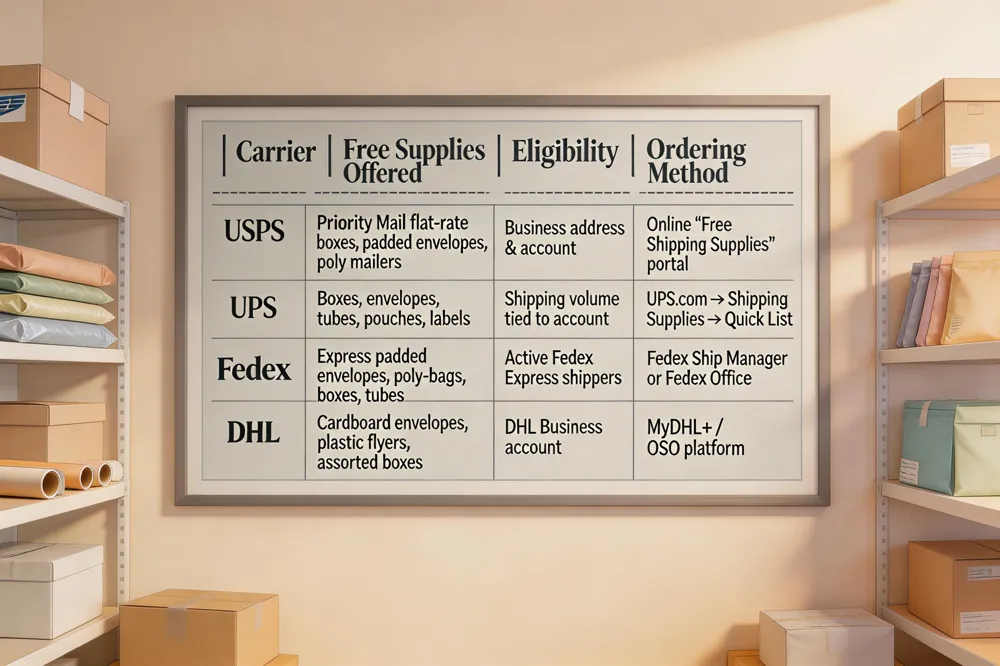
Major U.S. carriers give merchants free packaging when the service level matches the carrier’s own offerings. USPS supplies a full suite of Priority Mail flat‑rate boxes, padded envelopes, and poly mailers at no charge through its online "Free Shipping Supplies" portal. UPS provides complimentary boxes, envelopes, tubes, pouches and labels to any UPS.com account holder; allocations are tied to shipping volume and can be replenished via the Quick List feature. FedEx offers free Express packaging—padded envelopes, poly‑bags, boxes and tubes—to customers who ship with FedEx Express; orders are placed in FedEx Ship Manager or picked up at FedEx Office locations. DHL Express grants business accounts free cardboard envelopes, plastic flyers and assorted boxes via the MyDHL+ or OSO platform.
Free shipping supplies for small business – Register with each carrier, verify a business address, and order the desired items; most are shipped at no cost.
Free shipping supplies UPS – Log in to UPS.com, navigate to Shipping Supplies, select boxes, envelopes, or pouches, and place an order; eligibility depends on shipping activity.
Free shipping supplies FedEx – Create a FedEx account, use the Supplies tab in Ship Manager or visit a FedEx Office to receive free boxes, padded envelopes, and poly‑bags.
DHL free shipping supplies – Access MyDHL+, enter your account number, choose the supply type and quantity, and DHL ships the items within 2‑3 business days.
Free shipping envelopes – USPS, UPS and FedEx all provide free padded envelopes and poly mailers for lightweight orders; order through each carrier’s business portal after confirming eligibility.
Custom and Branded Boxes – Enhancing Brand and Efficiency
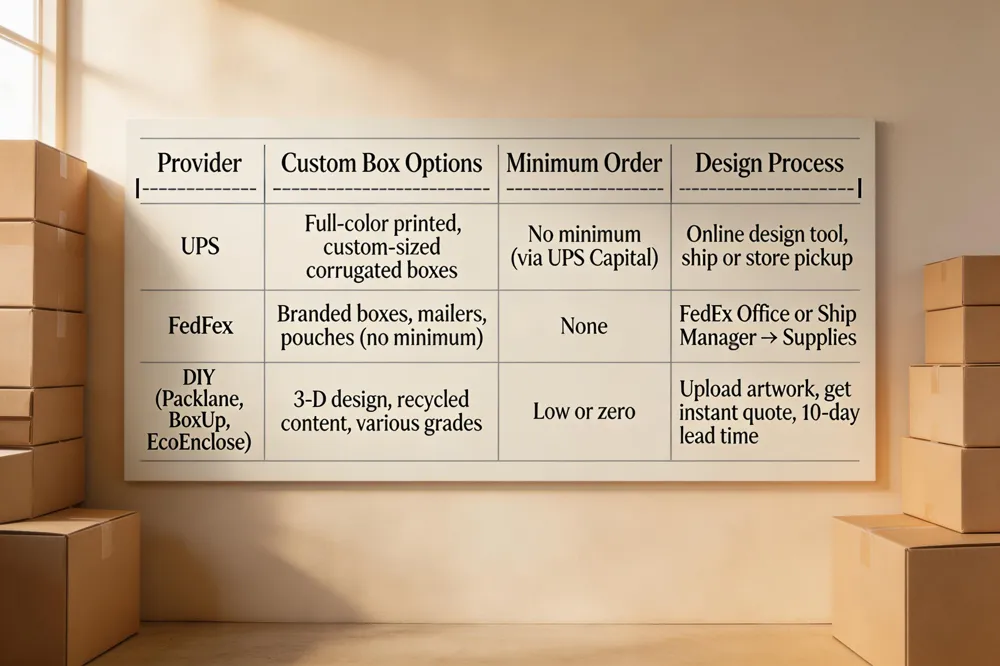
Businesses can turn packaging into a brand asset while cutting costs by leveraging carrier‑provided and DIY solutions. UPS custom boxes – UPS offers custom‑sized, full‑color printed boxes through UPS Capital and The UPS Store. Merchants design dimensions, corrugated grade and logo artwork online, then receive the boxes by ship or store pickup, gaining a professional look without leaving UPS’s reliable network. FedEx branded boxes – FedEx supplies complimentary boxes, mailers and pouches for Express shipments via FedEx Ship Manager or any FedEx Office location. For a fully branded unboxing experience, FedEx Office sells specialty custom‑printed boxes with no minimum order, allowing businesses to showcase their identity on every parcel. DIY custom box sourcing – Start with an online printer such as Packlane, BoxUp or EcoEnclose. Use the 3‑D design tool to select style, input exact dimensions, choose material strength or recycled content, and upload artwork. An instant quote appears, proof is approved, and the order ships in roughly ten days with low or zero minimums. This approach lets brands protect products, reinforce visual identity, and keep packaging expenses predictable.
Smart Cartonization and Dimensional‑Weight Management
Modern fulfillment teams rely on smart cartonization software to auto‑select the smallest, snug‑fit box for every order, eliminating excess "air" and reducing dimensional‑weight (dim‑weight) charges. The software evaluates product dimensions, suggests the optimal carrier‑approved box, and flags when a lightweight poly‑mailer or reinforced corrugated box is sufficient.
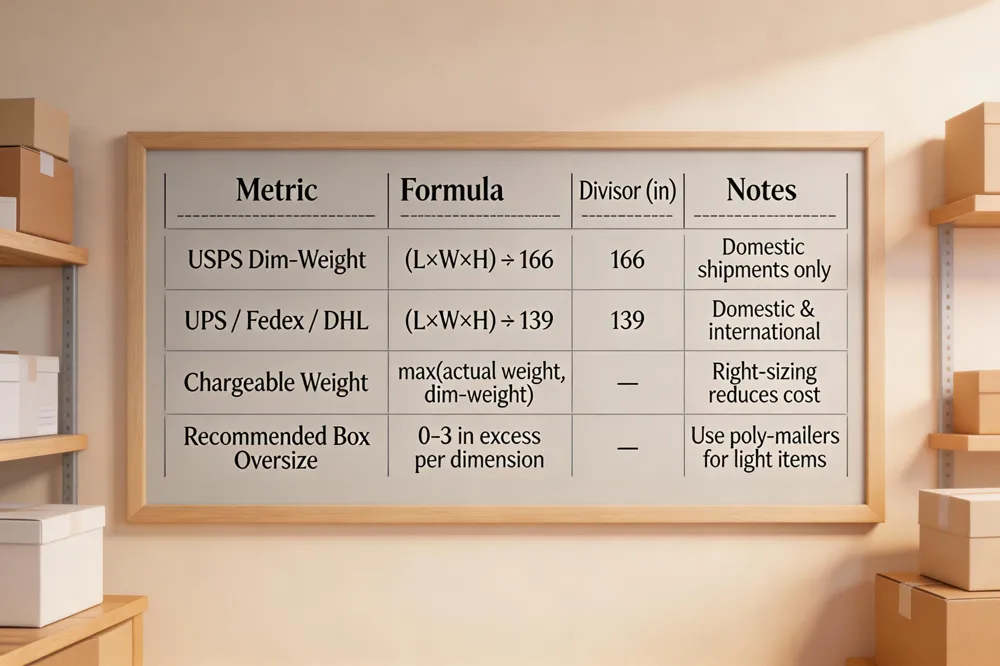
Dim‑weight formulas differ by carrier: USPS uses (L × W × H) ÷ 166 (inches) for domestic shipments; UPS, FedEx and DHL apply the same divisor of 139 for both U.S. and international parcels. The chargeable weight is the greater of actual weight or dim‑weight, so right‑sizing is critical.
Right‑sizing guidelines recommend a box that exceeds each product dimension by only 0‑3 inches, using poly‑mailers for lightweight non‑fragile items and sturdy corrugated boxes with minimal void‑fill for heavier or fragile goods. Reusing carrier‑provided free packaging—USPS Priority Mail flat‑rate boxes, UPS Express tubes, FedEx One‑Rate envelopes—keeps material costs low while ensuring compliance with service‑level requirements.
Efficient packaging for express delivery USA: Choose lightweight, sturdy corrugated boxes or reinforced poly mailers that fit the item snugly, eliminate excess void‑fill, seal with high‑quality tape, and use carrier‑provided boxes for next‑day or overnight shipments.
FedEx shipping weight: FedEx compares actual weight to dim‑weight calculated as (L × W × H) ÷ 139; the higher value becomes the rated weight for charge determination.
USPS international shipping rates by weight: USPS uses weight tiers and destination groups; Priority Mail International starts at $32.65 for a flat‑rate envelope up to 4 lb, First‑Class Package International begins at $19.40 for parcels under 4 lb, and flat‑rate boxes have fixed fees regardless of weight.
International Rate Comparison and Cost‑Saving Tools
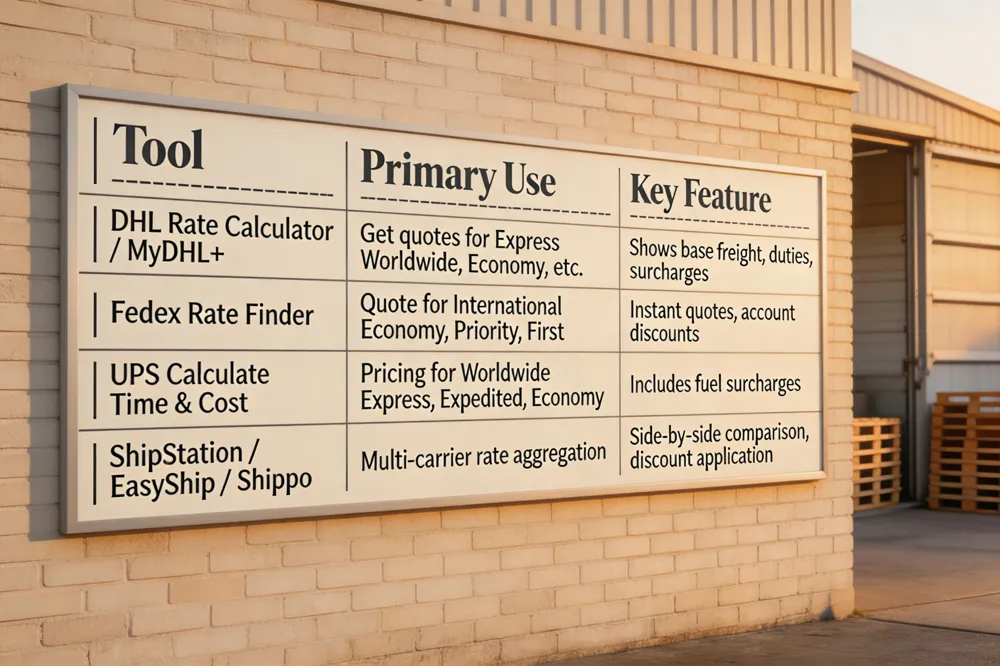
DHL international shipping rates DHL calculates rates by weight, dimensions, destination, and service level (Express Worldwide, Economy, etc.). Use the DHL online rate calculator or MyDHL+ “Get Quote” to input exact package details and see a breakdown of base freight, customs duties, surcharges, and optional insurance. Light documents to Europe may be under $30, while heavy pallets to Asia can exceed several hundred dollars.
FedEx international cost FedEx rates depend on service (International Economy, Priority, First), package weight/dimensions, and destination customs. A 1‑lb envelope typically starts at $40‑$55 for Economy and $55‑$75 for Priority. Heavier 5‑10 lb parcels range $100‑$150. The free FedEx Rate Finder provides instant quotes; accounts often receive discounts.
UPS international cost UPS pricing varies by service (Worldwide Express, Expedited, Economy), weight, and destination. A 5‑lb shipment to Canada costs $30‑$45; to Europe $45‑$70. Retail rates are higher than contract rates, and fuel surcharges apply. Use UPS’s Calculate Time & Cost tool for precise pricing.
Third‑party rate comparison platforms Tools such as ShipStation, EasyShip, and Shippo aggregate carrier rates, apply discounts, and display side‑by‑side quotes, helping merchants pick the cheapest express option.
How to optimize shipping cost Audit freight bills, negotiate contracts, use dimensional‑weight calculations, consolidate shipments, and employ TMS or smart‑packing software to reduce empty space and fuel surcharges. Monitor metrics regularly to adjust strategies.
Free Packaging Near You – Local Sources and Community Options
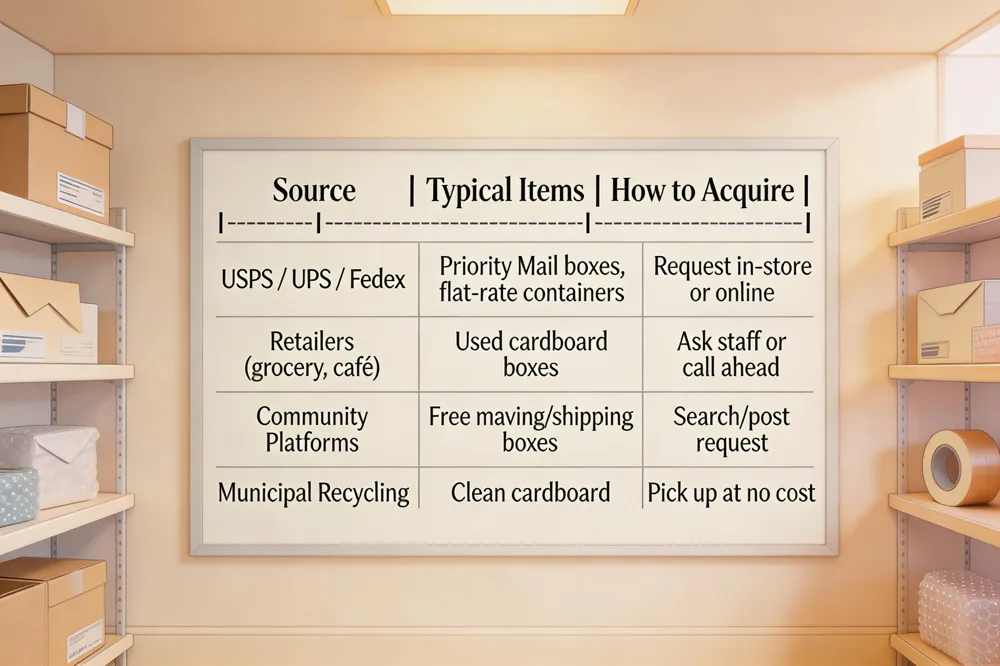
Finding free packaging locally can cut shipping costs dramatically. Below are quick ways to source boxes and envelopes without spending a dime.
Free boxes for shipping near me
USPS post offices and many retail locations give away Priority Mail boxes, envelopes, and flat‑rate containers to anyone with a U.S. address—just ask for “Free Shipping Supplies.” UPS Stores and FedEx Office outlets also provide complimentary boxes to business customers, so stop by the nearest outlet and request them. Grocery stores, liquor stores, cafés, and other retailers often set aside used cardboard boxes for free; a quick call or in‑person ask usually does the trick. Online community groups (Facebook Marketplace, Craigslist, Nextdoor, Freecycle) are another good source for free moving or shipping boxes from nearby residents. Municipal recycling centers accept clean cardboard and let you pick it up at no cost, supporting both your budget and the environment.
Where can I get free shipping supplies
Sign up for a business account with USPS, UPS, FedEx, or DHL and order free boxes, poly‑mailers, envelopes, and labels online or collect them at local carrier stores. These supplies are tied to specific service levels (e.g., USPS Priority Mail boxes must be used with Priority Mail shipments).
Free shipping envelopes
USPS offers flat‑rate padded envelopes and poly mailers at no charge. UPS supplies free express envelopes and clear label pouches through its UPS Supplies portal, while FedEx provides free padded envelopes and poly bags to active shippers. Verify eligibility in each carrier’s business portal and place your order.
International Packaging Best Practices
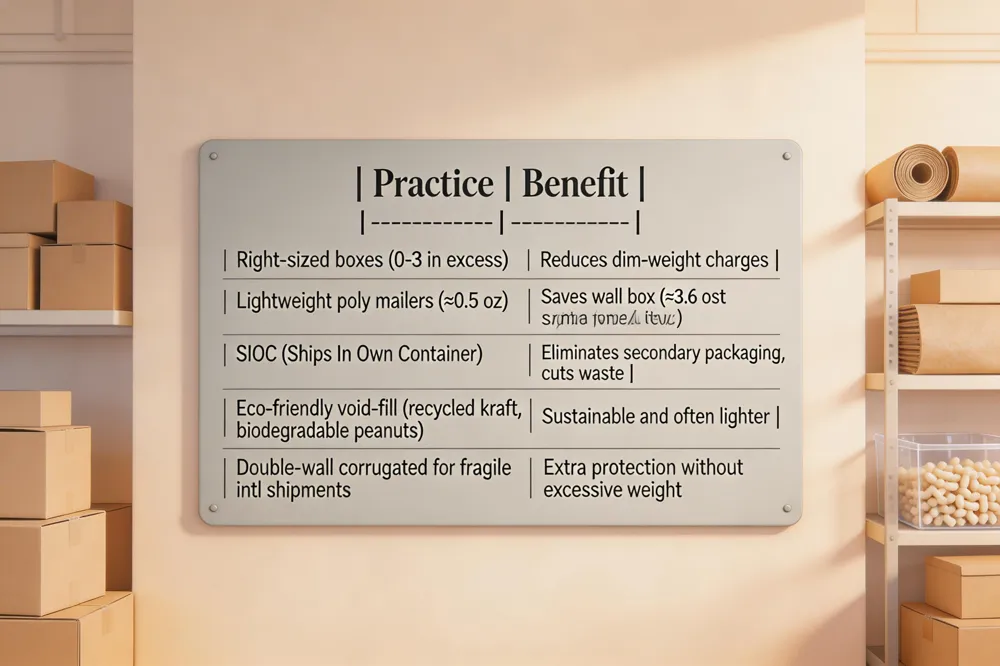
Right‑sized boxes and proper void‑fill are the foundation of cost‑effective international shipping. Choose a box that fits the product with only a few inches of excess on each side, then pack any gaps with lightweight, recyclable fillers such as crumpled kraft paper, biodegradable foam peanuts, or air pillows. Lightweight corrugated and Poly bubble mailers (e.g., 7.5" × 12") further reduce dimensional weight; a 7.5" × 12" poly mailer weighs only about 0.5 oz versus a small cardboard box at 3.6 oz, delivering significant savings on lightweight items.
SIOC (Ships In Own Container) eliminates secondary packaging entirely. When a product’s original container meets carrier size and weight limits, it can be shipped directly, cutting material costs, waste, and dimensional‑weight charges.
Eco‑friendly materials—recycled cardboard, biodegradable air peanuts, and plant‑based foam—support sustainability goals while keeping packages light.
How to properly pack a box for international shipping? Use a new double‑wall corrugated box, remove old labels, wrap each item in bubble wrap, place heavier items centrally, fill voids with cushioning, seal all seams with strong tape, attach a “this way up” label, then weigh, measure, and affix the shipping label and customs paperwork.
What type of packaging is recommended for express shipments? A sturdy corrugated box (double‑ or triple‑wall for heavy or fragile goods) with eco‑friendly void‑fill such as biodegradable peanuts or corrugated bubble wrap, sealed securely with high‑quality tape.
SIOC – how does it help? It removes the need for extra boxes and filler, reducing material costs, waste, and dimensional‑weight fees.
How to lower international shipping cost? Minimize dimensional weight with right‑sized packaging, set minimum order thresholds for free shipping, consolidate items, use flat‑rate or negotiated carrier rates, and partner with a 3PL to leverage volume discounts and provide clear landed‑cost estimates at checkout.
Free Packaging Strategies and Amazon Global Shipping
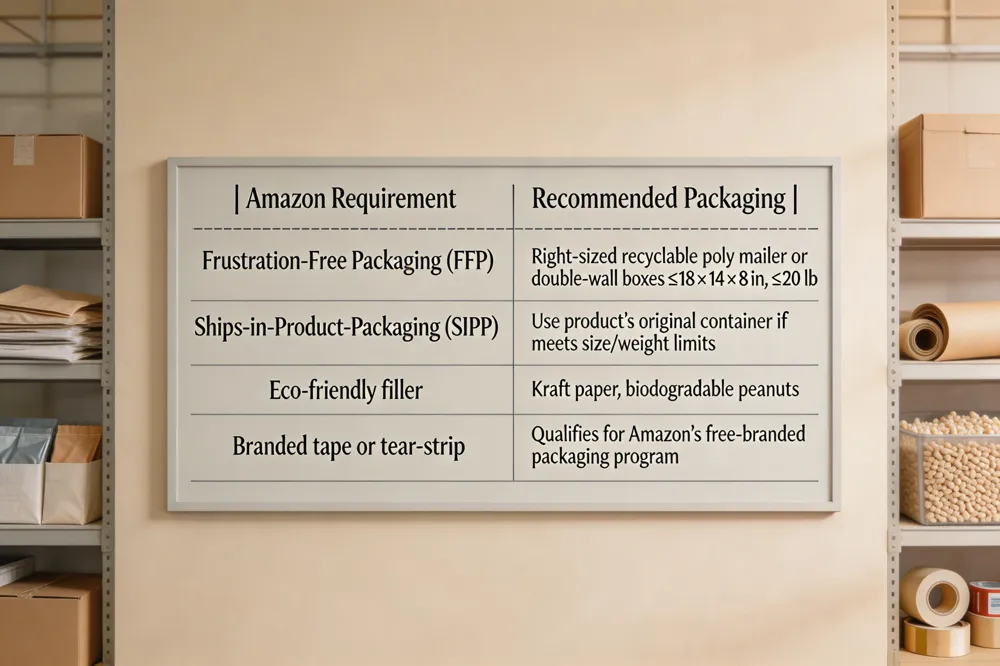
Amazon’s Frustration‑Free Packaging (FFP) and Ships‑in‑Product‑Packaging (SIPP) programs require sellers to use recyclable, right‑sized containers that protect items while staying lightweight. Choose poly mailers for soft, non‑fragile goods and six‑sided corrugated or double‑wall boxes for heavier or fragile products; keep dimensions at or below Amazon’s standard‑size limits (≤ 18 × 14 × 8 in) and weight under 20 lb to stay within free‑shipping thresholds. Use minimal eco‑friendly filler such as kraft paper to eliminate voids and avoid dimensional‑weight surcharges. Seal with pressure‑sensitive tape in an “H” pattern and place a flat, scannable label away from seams.
Global free shipping packaging tips for Amazon: Follow the FFP/SIPP guidelines by selecting right‑sized, lightweight containers—poly mailers for apparel, lightweight corrugated boxes for electronics—then add only enough cushioning to meet ISTA‑6 or similar tests. Leverage carrier‑provided free flat‑rate boxes (USPS Priority Mail, UPS Express) to keep costs predictable across borders, and ensure packaging meets Amazon’s brand‑compliant standards (branded tape or tear‑strip, recyclable materials) to qualify for Amazon’s free‑branded packaging program and worldwide shipping incentives.
Free Packaging Strategies for USPS and Global Shipping
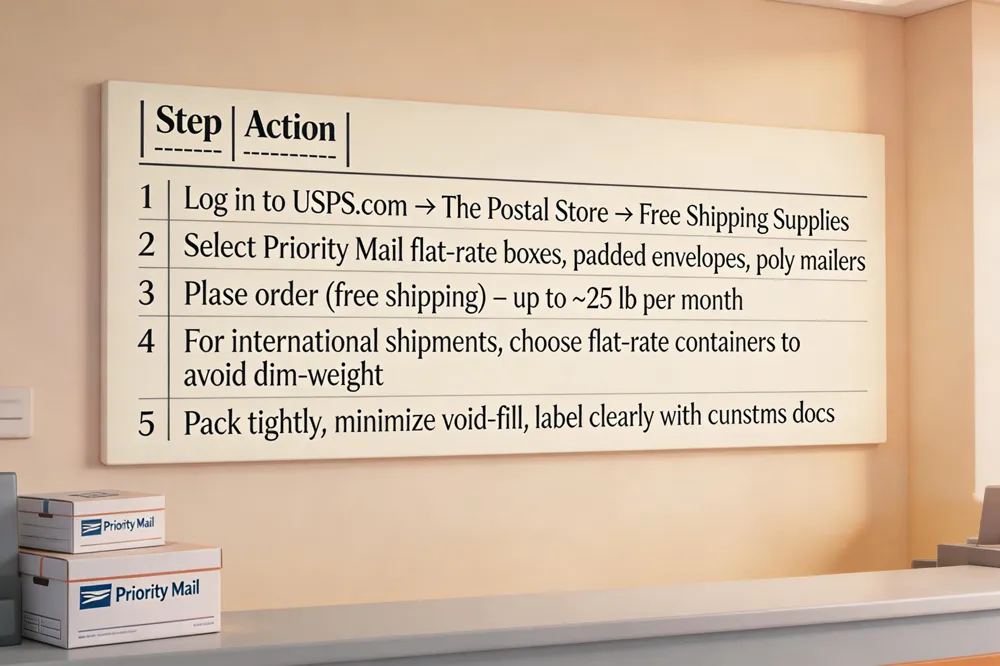
Offering free shipping is a powerful incentive, but the packaging cost can eat into margins. Leveraging carrier‑provided supplies eliminates much of that expense while keeping the un‑boxing experience professional.
How to get USPS packaging for free? To receive free USPS packaging, log in to your USPS.com account and go to The Postal Store® → Supplies (or hover over “Shop” and select “Shipping Supplies”). From the left‑hand navigation choose “Free Shipping Supplies” and add the boxes, envelopes, or labels you need, then place the order—shipping is free and the items are delivered to your address. You can also order the same free supplies through Click‑N‑Ship by selecting “Free Shipping Supplies” after you create a shipping label, or you can call 1‑800‑ASK‑USPS (1‑800‑275‑8777) and request them by phone. Free packaging is available to anyone with a USPS account, and you’ll receive a limited quantity each month (typically up to 25 lb of supplies). Keep an eye on the “My Orders” page to track delivery and reorder when your stock runs low.
Global free shipping packaging tips USPS Order your free USPS packaging directly from the Postal Store® or through Click‑N‑Ship® to get Priority Mail flat‑rate boxes, padded envelopes, and poly mailers at no cost. Choose flat‑rate containers whenever possible, especially for international shipments, because the price is fixed regardless of weight or distance, which helps you avoid unexpected dimensional‑weight charges. Pack items tightly and use the smallest box that comfortably fits the product to reduce empty space and protect the contents during transit. For small, lightweight items, use the free Priority Mail poly envelopes or padded envelopes, which are lightweight and inexpensive. Finally, always label the package clearly, include any required customs documentation for global shipments, and double‑check the address to prevent delays.
Free shipping envelopes USPS, UPS, and FedEx all offer free shipping envelopes and padded mailers to qualified business accounts for small, lightweight shipments. USPS provides complimentary Priority Mail flat‑rate padded envelopes, poly mailers and Tyvek envelopes that can be ordered directly from its online store at no charge. UPS supplies free express envelopes, clear label pouches and other packaging items to customers who meet its shipping‑volume thresholds, with access managed through a UPS.com account. FedEx similarly delivers free padded envelopes and poly mailers to business users who maintain a regular shipping cadence, available through the FedEx Ship Manager portal. To take advantage of these offers, sign in to each carrier’s business portal, verify your eligibility, and place an order for the desired quantity of free envelopes.
Eco‑friendly impact Reusing free carrier boxes, poly mailers, and recycled cushioning not only cuts costs but also reduces waste. Many carriers design their free supplies for optimal size, limiting excess material and supporting sustainability goals while keeping dimensional‑weight fees low.
Strategic Inventory, Fulfillment and Profitability
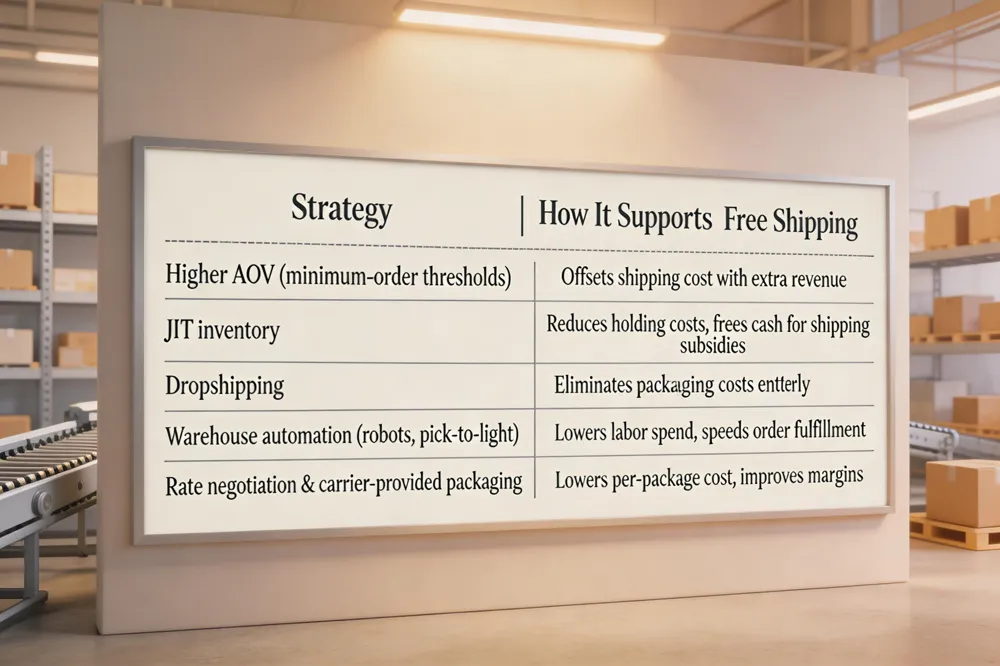
Free shipping becomes profitable when the "free" label removes a purchase‑friction point, boosting conversion and prompting shoppers to add items to meet a minimum‑order threshold. The extra revenue from higher average order value (AOV) offsets the carrier cost, especially when merchants negotiate lower rates, use carrier‑provided packaging (USPS flat‑rate boxes, UPS/FedEx free boxes), and locate inventory close to customers.
Just‑in‑Time (JIT) inventory (Just‑in‑Time (JIT) inventory cuts warehouse space and holding costs, freeing cash that can be redirected to cover shipping expenses. By receiving goods only as needed, businesses improve turnover and reduce the cash tied up in excess stock, making free express offers more financially sustainable.
Dropshipping (Dropshipping removes the need for inventory holding and packaging, eliminating box and filler costs. While margins may be tighter and fulfillment quality less controllable, merchants can still offer free shipping by leveraging supplier‑direct shipments.
Warehouse automation—such as Amazon Kiva robots or 6 River Systems’ Chuck (Warehouse automation—lowers labor spend and speeds order‑to‑ship cycles. Faster, cheaper fulfillment supports the economics of free shipping, allowing higher order volumes without proportionally higher labor costs. Together, these strategies align pricing, marketing, and operations to turn free shipping into a profit‑driving tool.
Putting It All Together for Global Free Express Shipping
Free carrier supplies—USPS flat‑rate boxes, UPS Express envelopes, FedEx One‑Rate parcels—remove the baseline packaging cost for expressed shipments. Pair these with smart cartonization software that selects the smallest snug box for each SKU, eliminating excess “air” and lowering dimensional‑weight fees. When carrier‑provided boxes run low, tap local sources: retailers, community free‑cycle groups, or returned Amazon boxes to keep costs near zero and boost sustainability. Align inventory tactics such as just‑in‑time stock or drop‑shipping with packaging efficiency, ensuring that the right product arrives in the right‑sized container without over‑stocking bulky boxes. Finally, set up a rate‑watch dashboard that pulls carrier updates, volume discounts, and regional surcharge changes; adjust thresholds for free‑shipping minimums and packaging choices in real time to preserve margins while keeping global express delivery free for customers.