
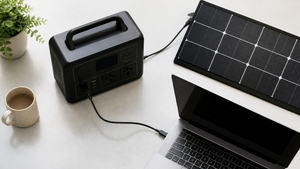

For a digital nomad, the hardest calculation often isn't the next flight or lodging—it's how to keep a laptop alive when the nearest outlet is a dusty tree stump. A portable solar generator changes that equation. It's a rechargeable battery power station that pairs with solar panels, turning sunlight into usable electricity without the roar of a gas engine or the hassle of fuel cans. For remote workers moving between campgrounds, vans, and off-grid cabins, this setup offers a way to stay powered while staying mobile.
Traditional gas generators come with noise, exhaust, and the constant worry of running out of fuel. Solar generators sidestep those problems entirely. They store energy in a battery, charge silently from the sun, and output clean power through standard AC outlets and USB ports. But they aren't magic—they have weight, capacity limits, and weather-dependent recharge times. Understanding how they work makes it easier to decide if one belongs in your digital nomad toolkit.
What Is a Portable Solar Generator?
A portable solar generator is a battery-based power station that recharges via solar panels, not a fuel-burning engine. Think of it as a large rechargeable battery with built-in outlets, designed to be charged from the sun or a wall outlet. Unlike a gas generator, it produces no exhaust, runs quietly apart from the occasional cooling fan, and requires no fuel storage. The core components are a battery (typically lithium iron phosphate, or LiFePO₄), a charge controller that manages solar input, an inverter that converts stored DC power to AC, and a solar panel input. The whole system is self-contained in a box you can carry—though some models are heavy, like the 53-pound Bluetti Elite 200 V2. In practice, it's a clean, renewable power source for laptops, cameras, and small appliances, as long as you have sunlight to feed it.
How Solar Generators Combine Battery Storage and Solar Panels
At the heart of a solar generator is a battery pack built from LiFePO₄ cells, a chemistry chosen for safety, longevity, and a robust cycle life. Many newer models carry a UL certification, a source-reported safety standard that indicates the battery has passed rigorous testing. This battery stores direct current (DC) electricity, but most of your gear—laptops, monitors, lights—runs on alternating current (AC). That's where the inverter comes in: it converts DC to AC, and the best ones deliver a pure sine wave, which is cleaner and safer for sensitive electronics. Cheaper modified sine wave inverters can cause buzzing or even damage some devices, so digital nomads with expensive gear tend to stick with pure sine wave models.
Solar charging happens through panels that plug into the generator's input, often using an MC4 connector. A charge controller regulates the flow of energy to prevent overcharging. The speed of a solar recharge depends on panel wattage and sunlight. According to a test by CNN Underscored, a single 200W Bluetti solar panel added about 6% battery per hour to the Bluetti Elite 200 V2, meaning a full solar charge took roughly 14 hours. That same unit wall-charged from 0% to 100% in just 1 hour and 11 minutes. So when you have access to a wall outlet, you can top up quickly; solar is for the long, slow days under open sky. You can also charge from a 12V car port, giving you a backup while driving.
Capacity is measured in watt-hours (Wh). A unit with 1,000+ Wh can run a 60W laptop for about 16 hours in theory, but real-world efficiency is never perfect. CNN Underscored found that the Bluetti Elite 200 V2 delivered 94% of its advertised capacity when running a 1350W load for 1 hour and 32 minutes. Output wattage matters too: that same model advertises a max of 2600W, enough to power a microwave or a portable heater, but drawing that much will drain the battery fast. A digital nomad's typical draw—a laptop, a router, maybe a camera charger—is far lower, so a 1–2 kWh battery can last a full workday. The key is to match capacity to your daily needs, not just to the biggest number on the box.
Why Digital Nomads Turn to Solar Generators
For anyone who works from a van or a tent, the fuel-free promise of a solar generator is a big deal. No more hauling gasoline, no more worrying about running out of fuel in the middle of a remote project, and no fumes seeping into your workspace. A CNN Underscored review noted that the reviewer could lift the EcoFlow Delta 3 Ultra into a car trunk, though the 92-pound Anker Solix F3000 was a different story. Portability varies, but many units are manageable with a bit of muscle, and the payoff is silent power. Unlike gas generators, solar generators are quiet enough to use at a campground without annoying neighbors, and stealth camping becomes far more viable.
Versatility is another draw. A single unit can power a laptop, a portable router, camera batteries, and even a small fridge. The ability to recharge from the sun, a wall outlet, or a car means you're rarely stuck with a dead battery. The Enphase guide highlights that these generators are clean, quiet, and endlessly renewable, which appeals to the eco-conscious traveler. And while they aren't completely silent—cooling fans do kick in under heavy loads—the noise level is a whisper compared to the constant rumble of a gas engine. For digital nomads who need to stay productive in off-grid locations, that combination of quiet and reliability is hard to beat.
Key Limitations and What to Know Before You Buy
A solar generator isn't a bottomless power source. CNN Underscored's testing of the Bluetti Elite 200 V2 showed that running a 1350W load drained the battery in just 1 hour and 32 minutes, delivering 94% of its advertised capacity. That's a stark reminder that high-wattage gear eats through stored energy quickly. If your workday involves a laptop and a Starlink dish, a 1,000Wh unit might be enough, but adding a coffee maker or a portable heater changes the math. Solar recharge is another variable. Cloudy weather, poor panel angle, or a single 200W panel can leave you with a half-charged battery by evening. When the sun is shy, you need a backup plan—a wall outlet or a car charger.
Weight and bulk can be dealbreakers. The Anker Solix F3000, for example, tips the scales at 92 pounds and has a side-mounted control panel that reportedly flips the unit over if you try to store it on its rear end. The 53-pound Bluetti Elite 200 V2 is more liftable, but still not something you'd want to carry on a hike. Customer support is another pain point. Feedback cited by Top Consumer Reviews mentions that Allpowers relies on slow email-only support, and some users reported longevity issues within two years. These aren't universal problems across all brands, but they matter when you're relying on the gear for work in a remote spot. Know the weight, test the support channels, and accept that battery capacity degrades over time—it's not a maintenance-free gadget.
Practical Tips for Using Solar Generators on the Road
Before you buy, calculate your daily watt-hour needs. List every device you'll power, multiply its wattage by hours of use, and add a buffer. A 1,000Wh unit might be perfect for a laptop and router, but if you need to run a portable fridge overnight, you'll want more capacity. Once you have the generator, charge it from a wall outlet whenever you can—it's the fastest way to top up. When you're off-grid, angle your solar panels directly toward the sun and adjust them every few hours. Even a slight tilt can make a difference, and a panel placed flat on a roof at noon might be missing out on a chunk of potential energy.
Test your entire setup at home before you leave. Plug in all your essential gear and run it for a full workday to see exactly how long the battery lasts, and how quickly it recharges from your panels. This dry run will expose any surprises—like a laptop drawing more power than you expected—before you're stuck in the middle of nowhere. For sensitive electronics, choose a generator with a pure sine wave inverter; it's cleaner power and reduces the risk of glitches or damage. And if you need uninterrupted power like a UPS, consider an EcoFlow model, which CNN Underscored reports can switch to battery in as little as 10 milliseconds, compared to 30 seconds or more for other generators. Small details like that can save you from losing work during a sudden outage. For a curated selection of portable solar generators for digital nomads, visit our collection.
