

A New Era of Immersive Entertainment
A New Era of Immersive Entertainment
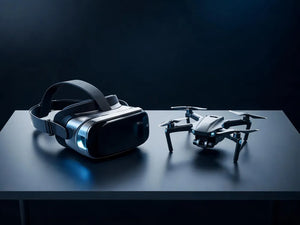
The entertainment industry is undergoing a profound transformation, driven by the convergence of drones and virtual reality (VR). This powerful combination is shifting the audience's role from passive observer to active participant, creating experiences previously confined to science fiction.
Drones equipped with high-resolution cameras capture breathtaking aerial perspectives. When paired with VR headsets, viewers can experience these perspectives in real-time, feeling as though they are soaring through the sky. This technology is turning viewers into participants, allowing them to control their own vantage point in a live concert, explore a film set from a bird’s-eye view, or navigate a digital world from the cockpit of a racing drone.
This shift is foundational. Audiences no longer just watch an event; they inhabit it, making the experience more memorable and emotionally engaging.
From Aerial Cinematography to Immersive Storytelling
Drones in Modern Filmmaking
Major films like Skyfall and The Wolf of Wall Street pioneered drone use for action and crowd scenes. In Jurassic World, a drone-mounted camera mimicked a pterosaur attack, flying low over a panicked crowd. This flexibility allows filmmakers to shoot from unique angles and altitudes, enhancing storytelling.
VR Transforms Viewers into Participants
Virtual reality takes this a step further. Instead of just watching, viewers can experience scenes from a first-person perspective. This turns them from passive observers into active participants within the narrative.
By combining drone-captured aerial footage with VR headsets, filmmakers can create immersive environments. For example, a virtual tour of a film set might let users explore locations from a bird's-eye view. This technology enriches entertainment by allowing audiences to feel present inside the story.
| Technique | Example | Benefit |
|---|---|---|
| Aerial cinematography | Skyfall, The Wolf of Wall Street | Cost-effective, dynamic shots |
| Immersive perspective | Jurassic World | Enhanced viewer engagement |
| VR integration | Virtual film sets | Interactive storytelling |
Sky-High Spectacles: Drone Light Shows as the New Fireworks
What are drone light shows and how do they work?
Drone light shows are transforming entertainment with synchronized swarms of illuminated UAVs. These computer-choreographed drones form intricate 3D patterns in the night sky, replacing traditional fireworks with a quieter, greener alternative that is reusable and environmentally friendly.
The process begins with storyboard and animation software that translates designs into precise flight paths. A ground control station sends encrypted radio signals to each drone, which is equipped with bright LED lights and safety features like geofencing. Shows are flown by certified pilots following strict checklists.
Synchronized to Music for Major Events
These aerial spectacles are often synchronized to music, creating powerful visual narratives. They have been featured at global events such as the Tokyo 2020 Olympics, where 1,800 drones formed a floating globe, the Super Bowl halftime show, and international festivals like Coachella. Artists including Drake and Metallica have also incorporated drones into live concerts for dynamic effects.
Customization and Scalability
Drone light shows are highly customizable and scalable. A small display can cost around $20,000, while larger productions scale based on drone count and complexity. The current world record for simultaneous airborne drones in a single show is 2,066, held by Intel, but even 50 drones can create compelling effects for smaller events. This flexibility makes them suitable for everything from corporate events to massive public celebrations. Companies like Sky Elements, which holds 16 Guinness World Records, design custom animations and music for clients worldwide.
| Feature | Traditional Fireworks | Drone Light Shows |
|---|---|---|
| Safety | Risk of burns, wildfires, and debris | Geofenced, no explosives; safer setup |
| Environmental Impact | Loud noise, air pollution, chemical residue | Quiet, reusable, minimal waste |
| Scalability & Cost | Fixed cost; limited reuse | From $20,000 (small) to large-scale; scalable drone count |
| Customization | Limited to pre-made shells | Fully programmable animations and music |
VR Concerts and Live Sports: Front-Row Seats from Your Living Room
How VR is Transforming Live Sports and Concerts
VR headsets are moving beyond gaming to give fans virtual front-row seats to major events. Live sports experiences are now available through platforms that stream NBA, NFL, and UEFA Champions League games, offering a sense of atmosphere and presence that traditional broadcasts cannot match. For concerts, major artists like the Foo Fighters, Ariana Grande, and Imagine Dragons have hosted live VR performances, allowing remote audiences to feel as if they are on stage or in the crowd.
Multiple Viewpoints and Drone Integration
A unique advantage of VR live events is the ability to switch between multiple viewpoints. Users can choose from traditional camera angles or select drone-fed aerial perspectives, providing a bird's-eye view of the action. Drones capture live, high-resolution footage, which is then streamed directly to the headset, making events like a basketball game or a concert feel more dynamic and immersive.
Social Viewing in Virtual Spaces
Social VR platforms are enhancing the experience by allowing people to watch events together in shared virtual spaces. Platforms like Big Screen VR and Meta's Horizon Worlds let users meet friends in a virtual cinema or stadium to watch live broadcasts, including the Super Bowl. This creates a sense of community and shared excitement, making remote viewing feel as engaging as being physically present without the need for travel or expensive tickets.
Theme Parks and Virtual Rides: Blending the Real and Virtual
How Are Drones and VR Combined in Theme Parks?
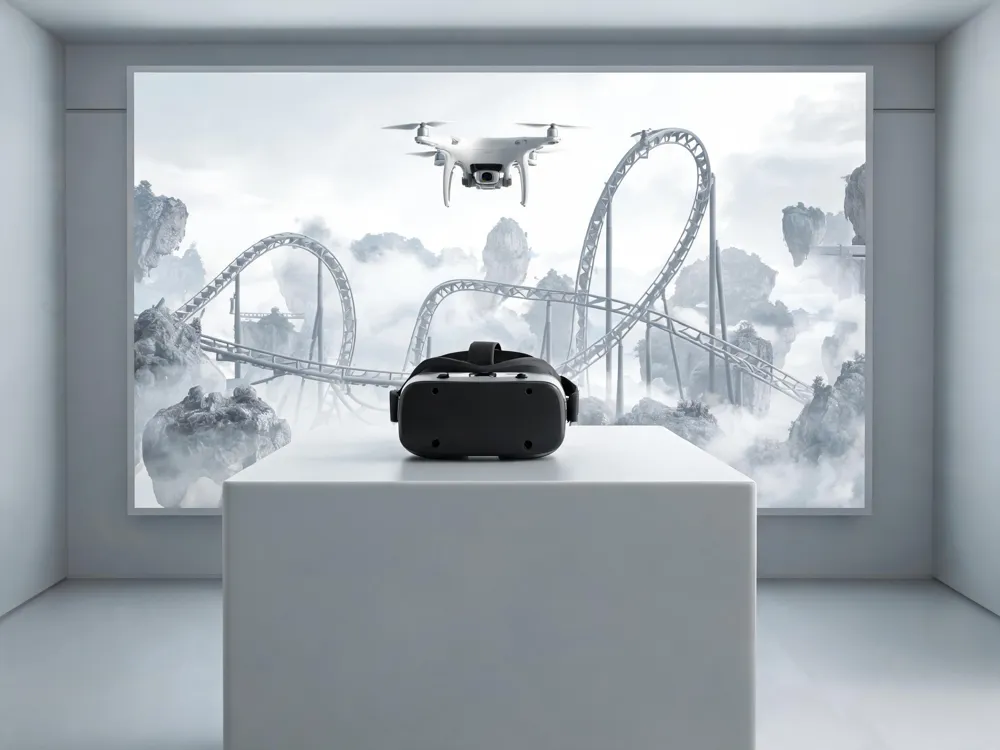
Theme parks are increasingly blending physical thrills with virtual immersion by integrating drone-captured 360° aerial footage into VR headset experiences. This combination allows visitors to enjoy hybrid rides that merge the sensations of physical motion with sweeping, cinematic visuals.
For example, a virtual roller coaster ride can overlay drone footage of a dramatic landscape onto the real-world track, giving riders the illusion of flying over canyons or through cityscapes. This approach transforms a traditional coaster into an immersive journey that would be impossible to achieve with physical sets alone.
VR Theme Parks: Dedicated Immersive Venues
Beyond individual rides, dedicated VR theme parks are emerging as destinations in their own right. The VR Star Theme Park in Guizhou, China, offers over 40 VR rides, showcasing the scale of entertainment possible when fully embracing virtual technology.
These venues often combine drone-captured aerial views with interactive virtual environments, allowing guests to experience extreme sports, fantastical worlds, or historical sites without leaving the park. The technology enables parks to create diverse, reconfigurable attractions at a fraction of the cost of traditional physical builds, while delivering novel thrills that keep visitors returning.
| Application | Example | Experience |
|---|---|---|
| Hybrid roller coaster | Physical coaster + VR headset with drone footage | Rider feels they are flying through a virtual landscape |
| Dedicated VR park | VR Star Theme Park (China) | Over 40 VR rides combining motion platforms and virtual worlds |
| Immersive aerial tours | Drone-360° footage projected in VR | Virtual flight over landmarks and natural wonders |
| Interactive stunt shows | Drones used in live-action VR sequences | Simulated flying objects and dynamic camera angles for audience |
This fusion of drone cinematography and virtual reality is redefining what theme parks can offer, making the impossible tangible and the extraordinary accessible. As hardware costs decrease and content creation tools become more sophisticated, expect to see these hybrid experiences become a standard feature at entertainment venues worldwide.
Virtual Tourism: Explore the World Without Leaving Home
How VR and Drone Tech Enable Virtual Tourism
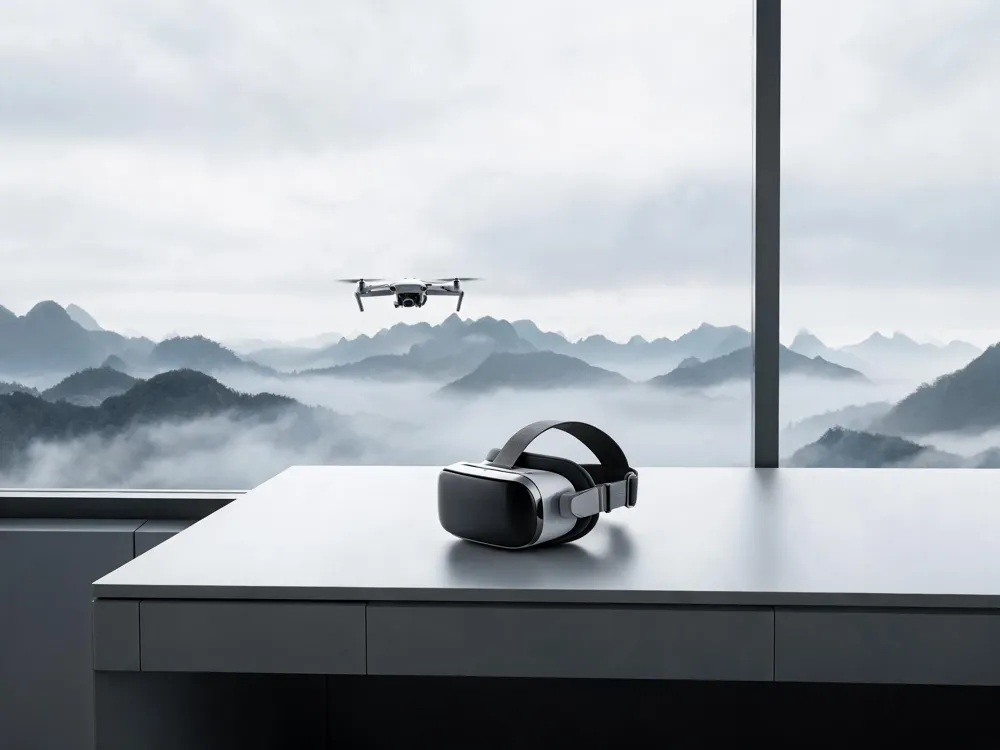
Combining drone-captured aerial footage with VR headsets creates immersive bird's-eye tours of real-world locations. Users can virtually visit remote areas—from the Natural History Museum to distant landscapes—without traveling. The technology streams the drone’s live video feed into the headset, often with head-tracking controls for a natural viewing experience.
Applications for Remote Exploration
- Museums & Cultural Sites: VR tours let users explore collections and architecture from afar, as seen with institutions like the British Museum.
- Natural Wonders: FPV drones over cities or landmarks offer cinematic tours of places otherwise hard to reach.
- Real Estate Virtual Property Tours: Potential buyers can tour properties and explore neighborhoods from a bird's-eye view, expediting decisions.
| Application | Example Use Case | Benefit |
|---|---|---|
| Museum tour | Natural History Museum virtual visit | Access without travel |
| Landmark tour | Drone flight over a national park | Immersive bird's-eye perspective |
| Real estate | Neighborhood aerial walkthrough | Faster property evaluation |
VR glasses (like Meta Quest 3) pair with drones (e.g., Bigly Brothers Voyager Zino) to make these experiences accessible. The fusion of live aerial footage and immersive headsets transforms tourism by enabling exploration of off-limit or distant locations.
The Tech Behind the Magic: VR Headsets and Drones Converge
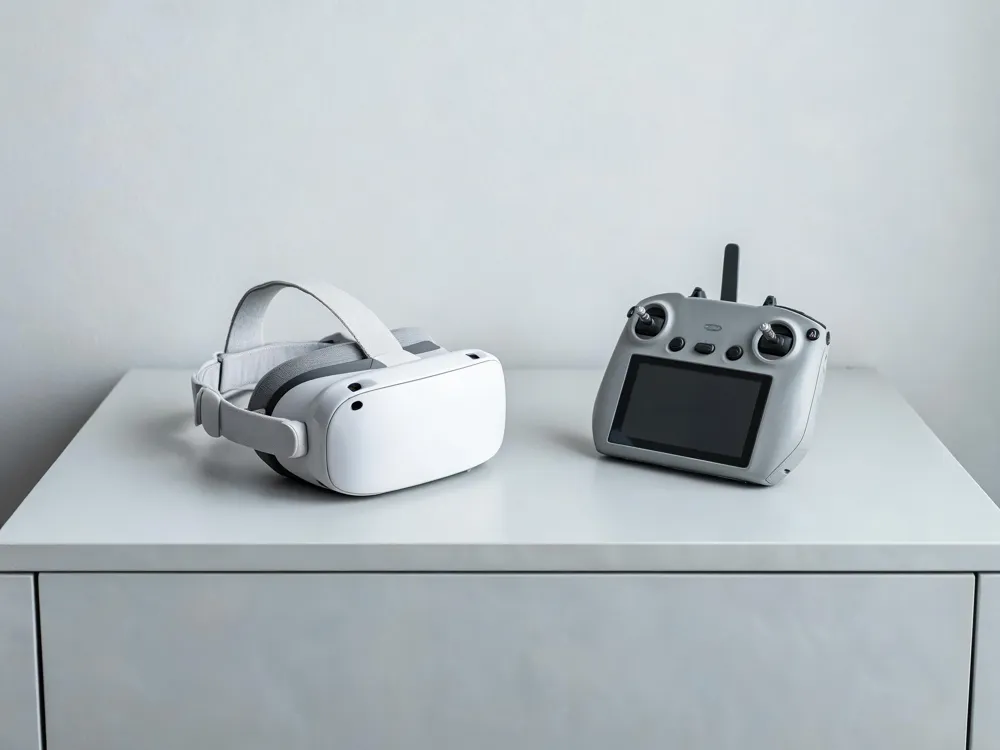
Understanding the core technology is crucial to appreciating the synergy between drones and virtual reality (VR). The magic happens when sophisticated VR headsets meet advanced drone control systems.
Key VR Headset Categories: Standalone vs. Tethered
Modern VR headsets fall into two main categories: standalone and tethered.
- Standalone Headsets: The Meta Quest 3 and Meta Quest 3S are cable-free, using built-in processors. The Quest 3S ($350) is a top value choice, offering updated graphics and color passthrough for mixed reality (MR).
- Tethered Headsets: The Sony PlayStation VR2 for PS5 ($400) connects to a PS5 for high-end gaming with a sharp OLED display and eye-tracking. The HTC Vive Pro 2 high resolution is for PC enthusiasts needing maximum clarity, with a resolution of 2440x2440 per eye.
The Apple Vision Pro spatial computer ($3,499) is a 'spatial computer' that uses eye and hand tracking, offering the most advanced mixed reality experience, though at a high cost.
Color Passthrough and Mixed Reality
Color passthrough cameras are a key innovation. Headsets like the Meta Quest 3S and Meta Quest 3 let you see your physical surroundings while interacting with virtual elements. This enables mixed reality (XR) experiences, where drone-captured footage can be overlaid onto the real world.
FPV Drone Control: Low-Latency Transmission and Head Tracking
The most direct convergence is in First-Person View (FPV) flying. A drone's camera feed is streamed live to the VR headset, letting the pilot see exactly what the drone sees. This requires low-latency transmission systems such as 5G and Wi‑Fi 6 for VR, with latency under 20 milliseconds to prevent motion sickness.
VR drones with head tracking for real-time camera gimbal movement take this further: turning your head moves the drone's camera gimbal in real-time. This creates an incredibly immersive experience, making the pilot feel as if they are physically in the cockpit.
| Headset Category | Example Model | Key Feature | Compatibility with Drones | Approximate Price |
|---|---|---|---|---|
| Standalone | Meta Quest 3S | Affordable color passthrough, mixed reality | FPV streaming via Wi-Fi/5G, ideal for simulators | $350 |
| Tethered (Console) | Sony PlayStation VR2 | HDR OLED display, eye-tracking | Limited; requires PC or PS5 for processing | $400 |
| Tethered (PC) | HTC Vive Pro 2 | Highest resolution for PC VR (2440x2440) | Excellent for drone simulators with high fidelity | $800+ |
| Spatial Computer | Apple Vision Pro | Premium eye/hand tracking, 4K micro-OLED | Advanced mixed reality overlays for drone data | $3,499 |
Educational and Training Applications: Learning by Flying
VR drone simulators let users practice piloting safely, reducing real-world risks and costs
VR drone simulators create a realistic, risk-free environment for aspiring pilots. Users can develop flight skills and build confidence before operating a real UAV. This approach eliminates the high costs of crash repairs and the safety concerns of training in the field.
Educational platforms use drone-captured VR content for interactive learning
Beyond piloting, educational platforms combine drone imagery with VR headsets for immersive lessons. For example, students can monitor crop diseases from a drone's perspective, turning abstract concepts into hands-on experience. This method enhances engagement and understanding of real-world issues.
Soft skills training via VR with up to 4x faster learning retention
VR also excels in soft skills training, such as public speaking and sales. A PwC study found that people learn up to 4 times faster in VR compared to traditional methods. This is due to experiential learning in a safe, repeatable space, which increases knowledge retention and practical application. The table below compares VR training benefits across different applications:
| Application Area | Training Focus | Key Benefit |
|---|---|---|
| Drone Pilot Simulators | Flight control, navigation | Risk-free, cost-effective practice |
| Educational Platforms | Crop monitoring, geography | Immersive, interactive lessons |
| Soft Skills (VR) | Public speaking, sales | Up to 4x faster learning retention |
Challenges and the Road Ahead
Technical Hurdles: Latency, Battery Life, and Hardware Constraints
Integrating drones with virtual reality faces significant technical obstacles. The most pressing is latency: for a smooth, immersive VR experience, video transmission from the drone must have under 20 ms of delay, requiring advanced 5G or specialized RF links.
Another primary limitation is drone battery life, typically only 20–30 minutes for most professional models. This restricts flight duration and the scope of live VR experiences. Additionally, VR headsets add weight and bulk, and the combined cost of a VR-compatible drone and a high-end headset remains high, limiting widespread consumer adoption.
Regulatory Challenges: Compliance, Safety, and Privacy
Operating drones for entertainment, especially with VR, involves strict regulations. Operators must comply with country-specific rules, such as FAA requirements in the US and Irish Aviation Authority (IAA) rules in Ireland. These include mandatory registration, pilot certification, and safety protocols.
For drone light shows, a 55-meter 'sterile zone' free of people is often mandatory. Data privacy is a further concern, as real-time video streaming from drones raises questions about surveillance and the secure handling of captured footage.
The Future: Shared Missions and Hybrid Interfaces
Looking ahead, innovation is focused on enhancing immersion and collaboration. Future systems will likely support team-oriented missions in shared VR spaces, where multiple users coordinate several UAVs simultaneously.
Hybrid AR/VR control interfaces will merge real-world environments with drone simulations, while holographic data representation in command centers could allow for intuitive oversight of complex drone swarms. As hardware costs drop and latency improves, these technologies are set to become a mainstream part of entertainment, from interactive cinema to expansive VR theme parks.
| Challenge | Specific Issue | Future Solution/Outlook |
|---|---|---|
| Latency | Delays over 20ms cause motion sickness | 5G and edge computing for near-zero lag |
| Battery Life | 20-30 min flight time for drones | Improved battery tech and swappable packs |
| Regulation | FAA/IAA rules, sterile zones | Streamlined permitting for commercial shows |
| Cost | High expense for VR drones & headsets | Wider adoption and economies of scale |
| Privacy | Data security from drone cameras | Encrypted transmission and data protection laws |
A World of Possibilities with Tidesmit
Synergy of Drones and VR
The combination of drones and virtual reality creates immersive entertainment. You can pilot an FPV drone via a VR headset, feeling as if you are in the cockpit. Alternatively, drone-captured aerial footage lets you explore a location from a bird's-eye view on a VR headset.
Your Next Upgrade with Tidesmit
Tidesmit is a trusted platform to access the cutting-edge technology that powers these experiences. They offer unlocked smartphones and consumer electronics, ensuring you have the fast processor and high-resolution display needed for smooth VR or a reliable device for controlling your drone.
Explore Tidesmit's Catalogue
We warmly suggest you explore Tidesmit’s catalogue for your next entertainment upgrade. Whether you need a new smartphone or a VR headset, Tidesmit provides the tools to bring these immersive worlds to life.
