
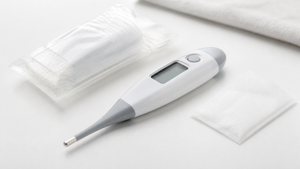

A flushed cheek and a warm touch in the dark can send any parent’s mind racing. Yet guessing a temperature by feel is notoriously unreliable — a mild elevation can feel alarming while a dangerous spike goes unnoticed. That’s why an accurate thermometer is one of the most important tools in a caregiver’s kit.
Babies can’t tell you how they feel, and their immune systems are still learning to respond to infections. A precise reading helps you know whether to monitor at home or seek medical care, especially when fevers rise toward a critical threshold.
Why Accurate Temperature Reading Matters for Babies
Fever is a natural immune response, often triggered when white blood cells fight an infection. But in infants, temperature can climb quickly and pose serious risks. According to CVS MinuteClinic, a rectal temperature above 100.4°F signals a fever, and a reading of 104°F or higher for any age requires immediate medical evaluation. CVS emphasizes that reliable readings are critical because the same symptoms—fussiness, lethargy, warm skin—can accompany both a low-grade fever and a concerning spike.
Without a thermometer, even experienced parents can misjudge the severity. A forehead that feels scorching might actually reflect a moderate 101°F, while a dangerously high 104°F might go undetected behind a sweaty, cool surface. In a baby under 3 months, a fever of any degree is serious enough to warrant a call to the doctor, making accuracy non-negotiable.
Types of Baby Thermometers: What the Evidence Says About Accuracy
Thermometers come in a dizzying range of designs, from no-touch infrared wands to simple digital sticks. But they don’t all work equally well for every age. Pediatric guidelines (referenced by oxymedz.com) point to rectal readings as the gold standard for the youngest infants, while other methods become reliable later on. Here’s what the evidence says about each type.
Rectal Thermometers: Most Accurate for Infants Under 3 Months
The American Academy of Pediatrics recommends rectal thermometers for babies under 3 months because they measure core body temperature more closely than any other method. As oxymedz.com explains, a well-lubricated tip inserted about half an inch (1.25 cm) gently into the rectum gives a reading that correlates best with a baby’s true internal temperature.
The process requires calm, steady hands. A swift, gentle motion keeps discomfort minimal. Though highly accurate, rectal use does introduce a contamination concern: if the same device is later used in the mouth, bacteria can spread. Many families opt for separate dedicated thermometers for rectal and oral routes, or use disposable probe covers.
Ear (Tympanic) Thermometers: Reliable for Babies 6 Months and Older
Ear thermometers are not meant for newborns. A baby’s ear canal is too narrow to get a proper seal against the eardrum, leading to falsely low readings. Health sources note that by 6 months, the ear canal widens enough for correct placement, making tympanic models a practical option.
Even then, accuracy hinges on technique. Pulling the ear back gently straightens the canal, and the probe must sit snugly against the eardrum—not against earwax or the canal wall. A quick 2-second reading is possible, but a careless fit can make the number unreliable. For many families, ear thermometers become a go-to for quick checks once the age threshold passes.
Forehead (Temporal Artery) Thermometers: Non-Invasive and Suitable for All Ages
Forehead thermometers scan the temporal artery just beneath the skin. They’re gentle, can be used on newborns, and serve as a sensible first pass when you need a ballpark reading without disturbing a sleeping baby. nfant.com points out, however, that they are generally less precise than rectal or well-placed ear readings.
Common missteps drag accuracy down further. Sweat, a cool room, or not swiping smoothly from center forehead to hairline can cause a low reading. And the forehead’s surface temperature doesn’t settle immediately after a warm bath, swaddling, or blanket time—waiting 20 to 30 minutes after those activities makes a meaningful difference. A backlit display helps during nighttime checks, a detail worth considering for new parents.
No-Contact Infrared Thermometers: Convenient but with Limits
No-contact models measure infrared heat from the forehead held 1 to 5 cm away. They appeal to anyone wanting a completely touch-free check, and sources like oxymedz.com note they can give a rapid screen. But the same sources caution that readings can be less accurate than contact methods, especially if environmental factors aren’t controlled.
A hat traps heat, so removing headwear and waiting at least 15 minutes before measuring is necessary. The GoodBaby No-Touch FC-IR202 and iHealth PT3 are two examples of no-contact designs—the PT3 delivers a result in 1 second, while others take a few moments longer. For a baby who startles easily, that speed can be a quiet blessing, but know that a no-contact reading may differ by 0.5 to 1.0 degree from a rectal measurement, a gap that can matter when a fever is borderline.
Underarm (Axillary) and Oral Thermometers: Less Accurate for Young Children
Underarm readings are noninvasive but consistently less accurate than rectal or ear checks. Pediatric guidelines suggest they can be used for babies over 6 months, yet the reading often sits 0.5 to 1 degree below core temperature. An axillary fever threshold of 37.5°C (99.5°F) is used, but the method’s variability means it rarely serves as the sole basis for medical decisions in infants. Oral thermometers, which require holding the probe under the tongue without biting down, are not recommended before age 4 because young children can’t cooperate safely.
A dual-use digital stick can work for both rectal and underarm sites, but marking or designating one device exclusively for rectal use sidesteps the cross-contamination risk entirely.
Mercury Glass Thermometers: No Longer Recommended
Old-style glass thermometers containing mercury pose a serious hazard. If the glass breaks, a toxic metal is released—a danger no modern health source condones. Mercury exposure can harm a child’s nervous system, and the risk alone is reason enough to retire any lingering glass thermometers. Switch to a digital alternative; they are faster, safer, and recommended by every pediatric authority referenced here.
Safety Risks and Age-Specific Recommendations
The starkest safety concern is mercury—a single broken glass thermometer can release a toxic metal that’s especially dangerous in a small body. The consensus to replace mercury models with digital devices is unanimous across pediatric and public health organizations.
A less obvious but common risk is cross-contamination when a single digital thermometer travels between rectal and mouth use without thorough cleaning. Washing with soap and water or rubbing alcohol after each use helps, but disposable probe covers or dedicating a device to one site removes the worry entirely. Age guidelines further protect babies: skip ear thermometers before 6 months (ear canals too small), hold off on oral thermometers until age 4, and stick with rectal measurements for infants under 3 months. Technique errors can also mislead: a forehead reading taken moments after a bath, a no-contact measurement while the baby still wears a hat, or an ear probe seated against earwax instead of eardrum can produce a falsely low result, potentially delaying needed care. Waiting the recommended time—20 to 30 minutes after a bath or swaddling, 15 minutes after hat removal—is a small but essential habit.
How to Take Your Baby's Temperature Correctly
Even the best thermometer can give an off reading if the technique isn’t right. These step-by-step approaches, drawn from standard pediatric guidance, help you get the most trustworthy number.
Using a Rectal Thermometer
A quick, careful motion makes this method safe and less stressful.
- Clean the tip with soap and water or rubbing alcohol, then apply a water-soluble lubricant.
- Lay your baby on their back, hold the ankles, and gently lift the legs, as you would for a diaper change.
- Insert the lubricated tip no more than half an inch (1.25 cm) into the rectum—just enough for the metal probe to be fully covered.
- Hold the thermometer steady between two fingers and wait for the beep, which usually signals a few seconds.
- Remove, read the display, and clean the device again.
Using a Forehead (Temporal Artery) Thermometer
Patience before scanning pays off.
- Wait 20 to 30 minutes after the baby has been bathed, swaddled, or bundled under blankets.
- Place the sensor firmly on the center of the forehead, between the eyebrows.
- Press the scan button and slide the device slowly toward one temple or the hairline, keeping contact with the skin the whole way.
- If the reading seems off, wait a minute and try again; a backlit display makes nighttime readings easier.
Using a No-Contact Infrared Thermometer
A little preparation keeps the reading honest.
- Take off any hat or bonnet and let the forehead acclimate for at least 15 minutes.
- Hold the thermometer 1 to 5 cm (about a finger’s width) from the center of the forehead.
- Press the trigger or button and wait for the instant reading—some models beep, others display silently.
- If the number is borderline, double-check with a contact method before making a medical decision.
Using an Ear (Tympanic) Thermometer
Correct placement is everything with an ear model.
- Gently pull the outer ear back and up (for older babies) to straighten the ear canal.
- Insert the probe snugly into the ear canal so it aims toward the eardrum, not the wall.
- Press the button and hold still until the beep, typically within 2 seconds.
- Remove and read the temperature; if the probe tip was blocked by wax, the reading will likely be low.
How to Choose the Right Thermometer for Your Baby
Start with your baby’s age. If you have a newborn, a dedicated rectal thermometer is the clear starting point. By 6 months, you can add an ear or forehead option to your home kit for quicker checks, saving the rectal for moments when you need the most exact reading.
Think about real-life routines. A no-contact model can be a gift in the middle of the night—the iHealth PT3 reads in 1 second and never needs to touch the skin, while the GoodBaby No-Touch FC-IR202 offers a similar non-invasive advantage. If you prefer a device that tracks temperature history, some app-connected ear thermometers share data directly with your phone. A backlit display matters more than you might expect during dim 3 a.m. checks. Meanwhile, a basic digital stick like the Vicks SpeedRead provides straightforward, no-frills operation. Each style brings a different balance of speed, connectivity, and ease of use. You can compare the options side by side in our baby thermometers collection.
Frequently Asked Questions About Baby Thermometers
What is the most accurate thermometer for a newborn?
A digital rectal thermometer. The American Academy of Pediatrics recommends it for babies under 3 months because it closely matches core body temperature. Other methods can underestimate a fever in the youngest infants.
Can I use an ear thermometer for my 3-month-old?
No. Ear thermometers are not advised before 6 months because an infant’s ear canal is too narrow for a proper fit, which can lead to falsely low readings.
How do I clean a digital thermometer?
Wash the tip with soap and warm water or wipe with rubbing alcohol after every use. To avoid cross-contamination, use disposable probe covers or keep a separate device for rectal and oral routes.
Why is my forehead thermometer reading low?
A low reading may result from a sweaty or cold forehead, incorrect swiping technique, or taking the temperature too soon after a bath or swaddling. Wait 20 to 30 minutes after those activities and rescan.
